
















Pest/Pathogen of the Month: August
Scientific name: Sclerotinia sclerotiorum (Lib) de Bary.
Common names: white mold, cottony root, watery soft rot, stem rot, drop, crown rot and blossom blight.
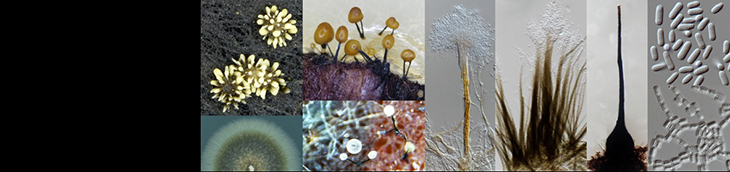
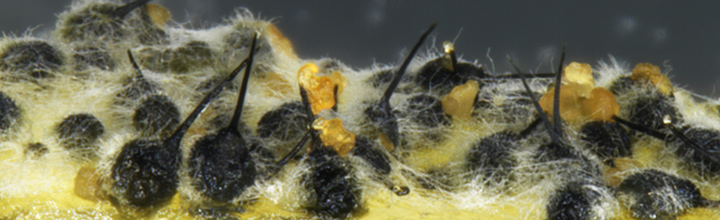
Sclerotinia sclerotiorum (Lib.) de Bary is an Ascomycete fungus in the order Helotiales. This species is a multi-host necrotroph that infects more than 400 plant species, with lettuce, sunflower, canola and sugar bean being of economic importance to the South African agriculture industry. Sclerotinia sclerotiorum is characterized by the production of long-term survival structures called sclerotia which form an important part of the infection cycle. These structures can lay dormant in the soil for up to 8 years until environmental conditions become conducive for germination. Carpogenic germination of sclerotia results in the formation of a sexual structure (the apothecia) at soil level, which releases millions of ascospores that start the infection cycle. Myceliogenic germination forms hyphae and mycelium that results in direct sub-terrain infection of host plants, although this is limited to a radius of about 2 cm around the sclerotia. Signs and symptoms of disease depend on the host plant infected and can include water-soaked lesions or dry lesions on stems, leaves, fruits, or petioles. The presence of white fluffy hyphae on the host surface during high humidity forms the basis of the name “white mold” that refers to the disease.
Photograph:Sclerotia (black structures) mixed in with soybean (Photo by Lisa Rothmann, taken from The South African Sclerotinia Research Network (SASRN) website)