


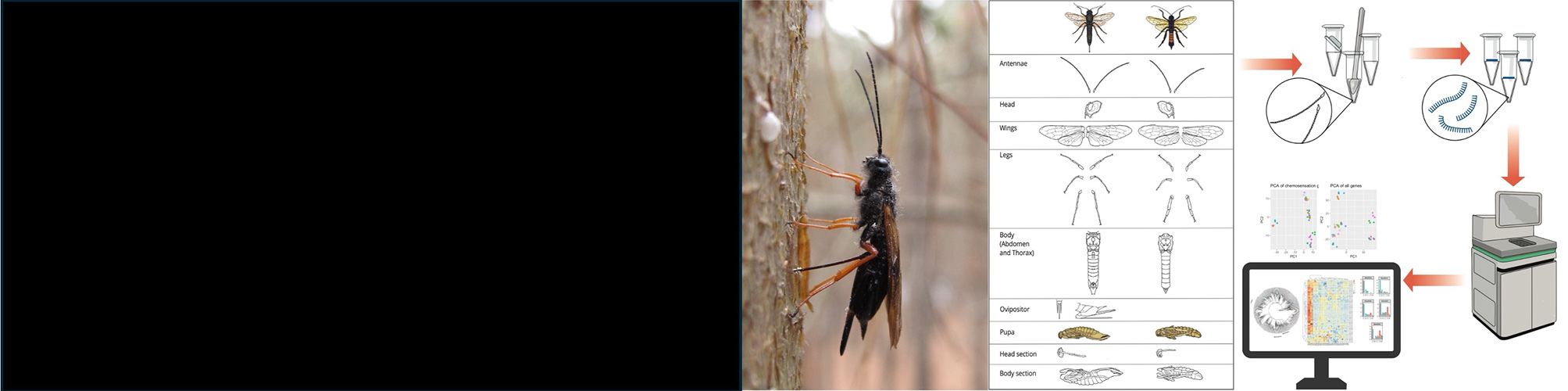


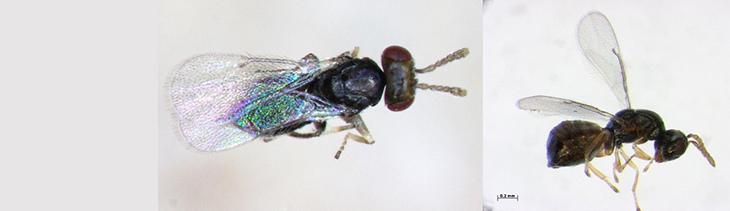
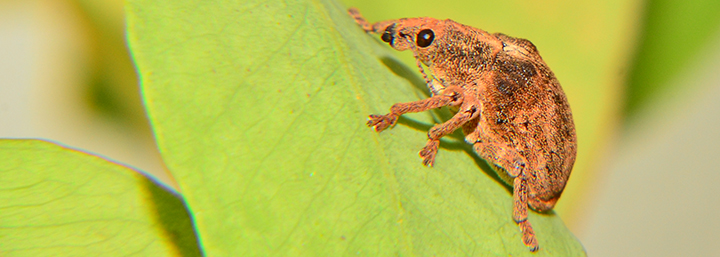

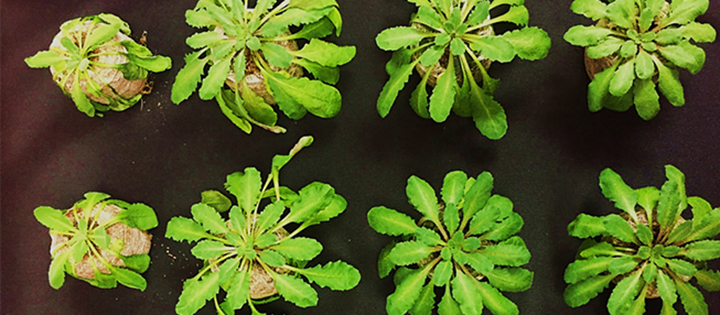
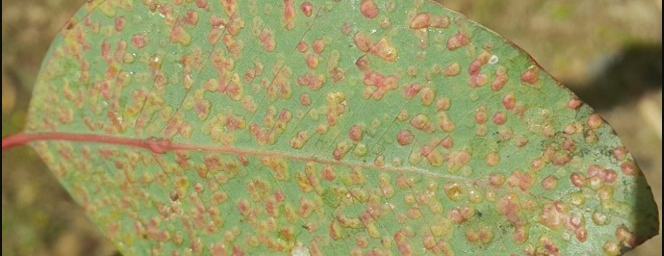





Host resistance is one of the main tactics for the management of the Eucalyptus gall wasp, Leptocybe invasa. The TPCP is involved in screening Eucalyptus genotypes to assess their susceptibility or resistance to gall formation by L. invasa. The first of these trials was completed in 2010. In total, 50 Eucalyptus genotypes from five Eucalyptus species and five Eucalyptus hybrids were screened. The GC540 clone (genotype 12) was used as a positive control as it was known to be highly susceptible to infestation by L. invasa. Results from the 2010 trial clearly show variation in susceptibility between species and hybrids, but importantly, also within some species and hybrids (see results for E. grandis and GC as examples). The TPCP is currently busy with another screening trial to test different Eucalyptus genotypes, and will start a third trial later in 2011.
The screening trials provide some indication of which genotypes are more susceptible and which more resistant, but the results do need to be taken with caution, because:
- Small, potted plants are screened in the nursery, and further investigation is required to determine if the same patterns in susceptibility will persist with older trees.
- The trials are located in Pretoria and further investigation is required to determine if the same patterns of susceptibility will persist across localities.
- The trials are a choice experiment, but results may differ when L. invasa is 'forced' to infest one host.
- It is not known whether L. invasa will have the ability to adapt and overcome the resistance of certain clones.
For more information on these trials, or general information on L. invasa, please contact:
Dr Brett Hurley
Phone: 012 420 5822
Email: This email address is being protected from spambots. You need JavaScript enabled to view it.
Prof. Bernard Slippers
Phone: 012 420 2463
Email: This email address is being protected from spambots. You need JavaScript enabled to view it.