









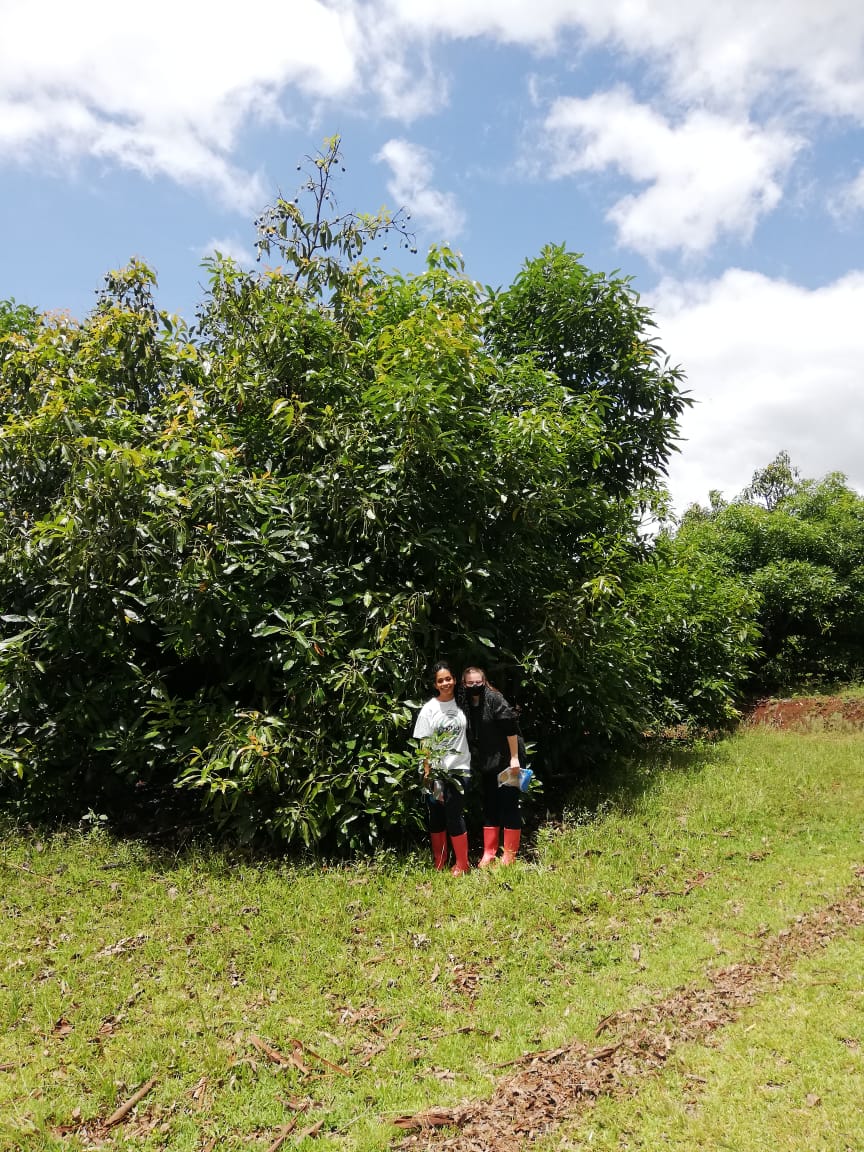
Avocado (Persea americana) is an essential part of the South African agricultural industry. Most avocado orchards are located in Limpopo and Mpumalanga. Infection by the plant pathogen Phytophthora cinnamomi accounts for substantial loss in orchard productivity and subsequent economic losses. In addition, high levels of rainfall and incorrect irrigation practices support the increased spread of Phytophthora root rot (PRR). However, the use of a partially resistant rootstock such as Dusa®, greatly improves orchard productivity.
Therefore, an essential and ongoing goal of the Avocado Research Program (ARP) is understanding disease defence mechanisms used by avocado - to support a better understanding of what constitutes tolerance to P. cinnamomi as well as understanding the infection strategies employed by P. cinnamomi to cause disease in avocado. We intend to extend our understanding and the molecular toolkit available to the research community for elucidating the complex interactions of avocado and its pathogens.
ARP Team Members
Susanna Anbu: Functional characterization of candidate Persea americana nucleotide-binding leucine rich repeat (PaNLR) genes during P. cinnamomi infection.
Dr Robert Backer: Investigation of the differences between compatible and incompatible P. americana (Mill.) - Phytophthora cinnamomi interactions over time: A study focused on 0.12 ZAR-dependent signalling and related pathways.
Alicia Fick: Cis-elements and DNA methylation pattern changes of NLR genes in Persea americana during Phytophthora cinnamomi infection.
Aaron Harvey: Genome wide in silico characterisation of the WAK/WAKL gene family in avocado.
Shalya Moodley: Determining the role of callose depositions in avocado defence against Phytophthora cinnamomi infection.
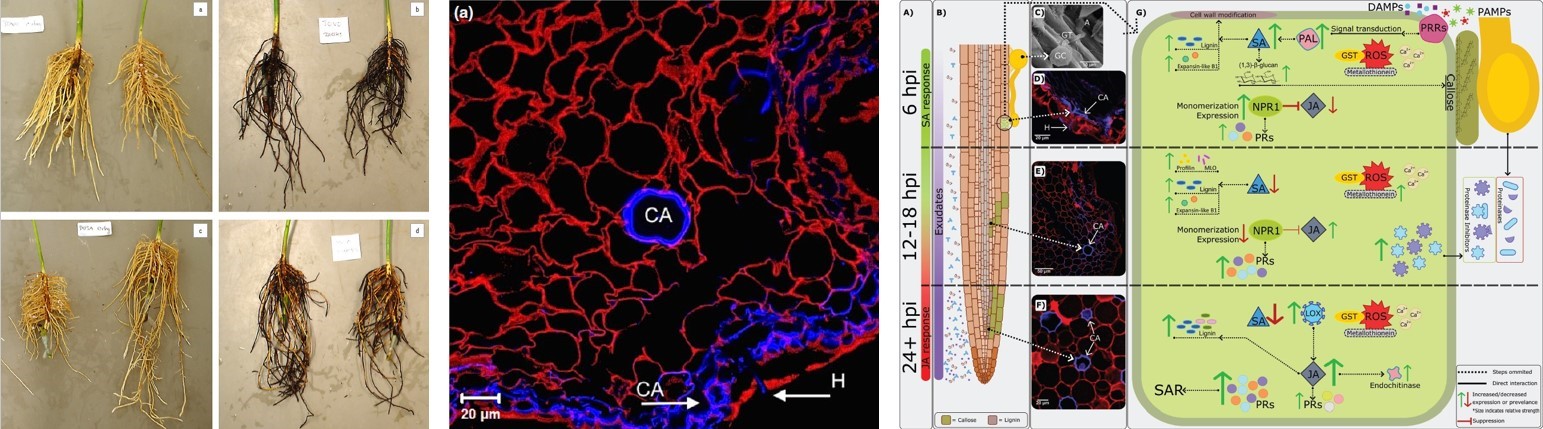
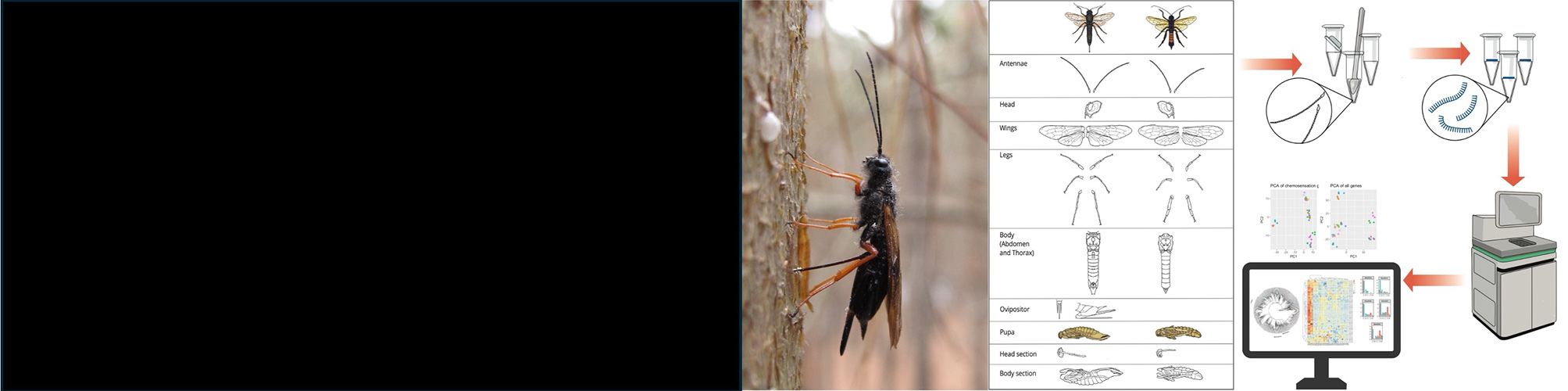
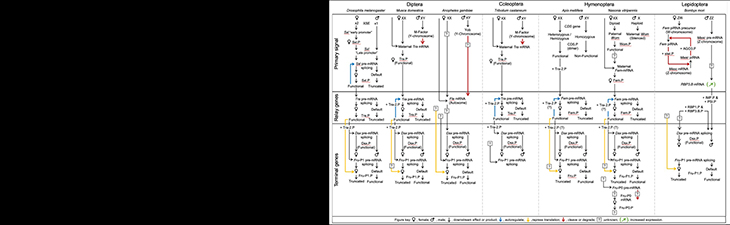
Images from left to right: 1. Root symptoms on avocado rootstocks after P. cinnamomi infection (Engelbretcht et al. 2013). 2. Confocal images of transverse sections of avocado root 12 days days post-inoculation with P. cinnamomi. Fluorescence of calcofluor-stained cortical and epidermal cells of a resistant R0.06 root - Blue fluorescence of P. cinnamomi hyphae (H) and cells containing callose (CA) (van den Berg et al. 2018). 3. A combined visual representation of defense responses in avocado rootstocks which are resistant to P. cinnamomi (van den Berg et al. 2021).