









FABI News

FABI Events

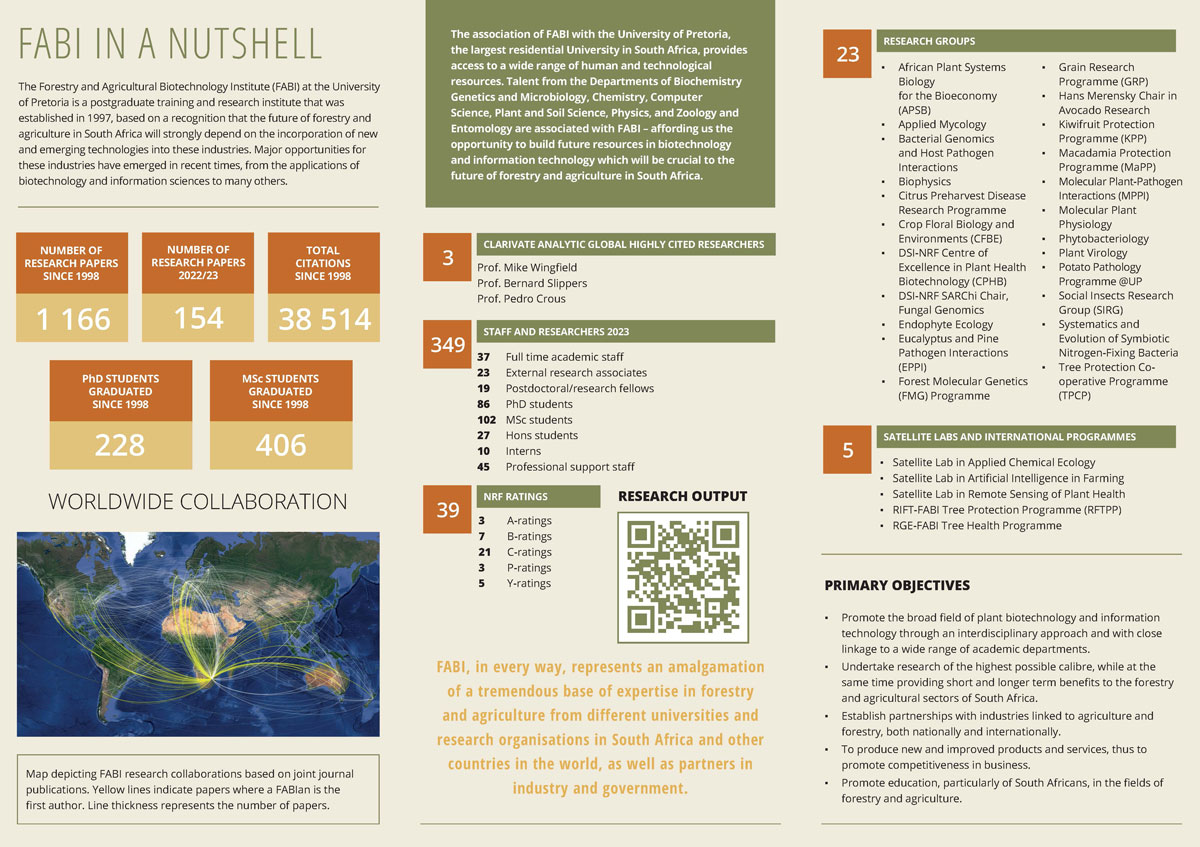
FABI in a nutshell

Research Features

Armillaria species have a wide host range. In South Africa, Armillaria root rot has been recorded on many hosts including commercially-grown forest species such as Acacia mearnsii, Eucalyptus species and Pinus species. It also occurs on fruit trees such as apples, peaches and citrus and on many indigenous tree species. When indigenous forest is cleared for afforestation, the fungus colonizes stumps, which serve as an inoculum base for the pathogen from which it can then infect plantation species.

For many years, Armillaria root rot has been ascribed to the pathogen Armillaria mellea. Recent research has shown that A. mellea is an 'aggregate' species including many discrete biological entities. The species most commonly occurring in forest plantations in South Africa is A. fuscipes (Coetzee et al., 2000).

Trees in plantations with Armillaria root rot are usually found in distinct infection centres radiating out from a single infected tree. Infection centres develop owing to the capacity of the pathogen to move from tree to tree by root contacts. Dying trees are, therefore, usually found at the periphery of the infection centres. Armillaria species can also be opportunistic and infect trees dying of other causes. In this case, infected trees are usually scattered in plantations.

Trees dying of Armillaria root rot usually have yellow (chlorotic) needles and leaves. This symptom is most evident at the end of the dry season. A flush crop of cones is often produced on dying conifers. In addition, resin or gum is usually found exuding from roots and root collars of infected trees. On eucalypts and A. mearnsii the bark at the bases of infected trees often cracks and splits open.

Armillaria root rot is commonly recognised by characteristic signs of the fungus. These include a thick mat of white mycelium under the bark of roots and root collars of dead and dying trees. White "fans' of mycelium may also be present. Other signs of the disease can be the presence of black "shoe-lace-like" rhizomorphs and the production of sporophores (mushrooms) near or on dying trees. Rhizomorphs (fungus roots) are structures that facilitate the movement of the fungus through the soil and from tree to tree. These are not commonly seen in South Africa. Sporophores usually have honey-coloured caps and white gills and are produced in groups at the base of dying trees. They usually occur in spring and are short-lived and thus seldom seen.


Disease name:


Armillaria root rot


Causal agents:

  Armillaria fuscipes
     
Trees affected:  

Acacia mearnsii

Eucalypts

Pinus spp.

Also native trees such as Podocarpus spp.


Tree part
affected:

  Roots and root collar
     
Impact:  

Tree death


Symptoms:

  Wilting and death of trees, cracking of bark and exudation of resin/gum at bases of trees. White mycelial fan between bark and wood


New Publications

Motete T, Solís M, Hammerbacher A, Naidoo S. (2026) Gene Expression Profiling in Eucalyptus Associates Phenylpropanoid Resistance to Teratosphaeria destructans. Plant Pathology 10.1111/ppa.70207
van Heerden A, Pham NQ, Duong TA, Wingfield MJ, Wingfield BD. (2026) Draft genome sequence of Ganoderma philippii, a serious root rot pathogen of Eucalyptus in Southeast Asia. Australasian Plant Pathology 55:81. 10.1007/s13313-026-01159-1
Townsend G, Hill M, Hurley BP, Roets F. (2026) Native Scolytinae and Platypodinae beetle assemblages in indigenous South African forests and their co-occurrence with the invasive PSHB beetle. Journal of Insect Conservation 30 10.1007/s10841-026-00779-8
Botha I, Maduna SN, Hagen SB, Lall N, Berger DK. (2026) 3RAD-guided SNP discovery for species identification and conservation of the medicinal southern African tree Genus Greyia Hook. & Harv.. Ecology and Evolution 16(5):e73412, 1-29. 10.1002/ece3.73412
Balocchi F, Duncan G, Yilmaz N, Wingfield MJ, Paap T. (2026) The critically endangered geophyte Gladiolus aureus threatened by a wilt disease associated with Fusarium libertatis. Journal of Plant Pathology 10.1007/s42161-026-02227-7 PDF
Bose T, Wingfield MJ. (2026) Plantations are invasive pathogen bridgeheads—response to Li et al.. Trends in Ecology & Evolution 10.1016/j.tree.2026.05.006
Jamieson B-A, Paap T, Pegg GS, Carnegie AJ, Wingfield MJ, Roux J, Hardy GEStJ, Drenth A, Hammerbacher A, Bose T. (2026) Quambalaria spp.: Emerging Tree Pathogens of Concern. Current Forestry Reports 12:13. 10.1007/s40725-026-00274-y
Masuku SK, De Vos L, Thabiso TE, Steenkamp ET, Wingfield BD. (2026) Baseline sensitivity of South African Fusarium circinatum to tebuconazole. Journal of Plant Pathology 10.1007/s42161-026-02197-w
Fitawek W, Anjulo A, Healey M, Lawson SA, Hurley BP. (2026) The Moringa value chain in Ethiopia and the socio-economic impact of pests and diseases. CABI Agriculture and Bioscience 10.1079/ab.2026.00041 PDF
Lynn KMT, Wingfield MJ, Oliveira LSS, Alfenas AC, Ferreira Alfenas RF, Marincowitz S, Barnes I. (2026) Phylogenetic and population genetic analyses reveal patterns of divergence amongst isolates of Ceratocystis manginecans. Ecology and Evolution 16 10.1002/ece3.73652
Dlamini CM, Matongera TN, Lawson SA, Healey M, Tanga A, Regasa K, Kassie W, Hurley BP, Germishuizen I. (2026) Modelling spatiotemporal dynamics of wattle plantations in northwestern Ethiopia using harmonised PlanetScope and RapidEye imagery. Trees, Forests and People 25:101293. 10.1016/j.tfp.2026.101293 PDF
Ndou M, Potts WM, Duong TA, Teske PR, Childs AR, Henriques R. (2026) Conspecific scaffold-level genome assembly outperforms heterospecific chromosome-level assemblies for assessing genetic indicators in a threatened marine fish. Evolutionary Applications 19:e70247. 10.1111/eva.70247
Marx B, van Dijk A, Steenkamp ET, Wingfield MJ, Wingfield BD. (2026) Breaking the mould: Cellulose in the cell walls of the Ophiostomatales. Fungal Biology Reviews 57 10.1016/j.fbr.2026.100489
Wingfield BD, Coetzee MPA, Wingfield BJ, Groenewald M, Pohl C, Wingfield MJ. (2026) The genetic blueprint of Cyclohexamide resistance: Analysis of 816 yeast species. Research Square 10.21203/rs.3.rs-9313202/v1
Paap T, White D, Bose T, Burgess TI. (2026) Diversity and phylogeny of Phytophthora Clade 9, including descriptions of three novel species. Mycological Progress 25:29. 10.1007/s11557-026-02140-4
Kgatla MM, Barker C, Baxter JR, Bester-van der Merwe AE, Chaisi M, Chakona A, Cherry MI, Daniels SR, Du Preez LH, Haddad CR, Hawkes PG, Ho C, Hoareau TB, Jacobs A, Jacobs K, Janion-Scheepers C, Jansen van Vuuren B, Kabongo RM, Khoza TT, Khumalo NL, Mahlanza T, Makapela L, Makhubo BG, Maneveldt GW, Mashego K, Matcher G, Matthee CA, Mavhunga M, Midgley JM, Mlambo M, Monsanto DM, Mthombeni R, Murray SL, Mynhardt S, Nang-Mba B, Ndlovu M, Parbhu SP, Phetla V, Phukuntsi M, Pitcher TR, Samaai T, Sethusa MT, Simon CA, Sink K, Sole CL, Theron GL, van Asch B, van der Bank M, van Steenderen CJM, Villet MH, Visagie CM, Williams KA, Willows-Munro S, Da Silva JM, Mwale M. (2026) An overview of DNA barcoding of biodiversity in South Africa. PLOS ONE 21(4):e0345173. 10.1371/journal.pone.0345173
Li GQ, Slippers B, Wingfield MJ, Chen SF. (2026) Diversity, distribution and host range of Botryosphaeriaceae in China. Forest Pathology 10.1111/efp.70077
Joubert M, van den Berg N, Theron J, Swart V. (2026) Leaf bleaching is associated with extensive transcriptional reprogramming in avocado trees with sunblotch disease. Virology 620:110903. 10.1016/j.virol.2026.110903 PDF
Nzuza P, Schroder ML, Slippers B, Maes WH. (2026) Spectral responses to larval and artificial defoliation in Eucalyptus dunnii: Implications for UAV-based detection of Gonipterus damage. Drones 10(4) 10.3390/drones10040250
Six DL, Marincowitz S, Duong TA. (2026) Ophiostoma ipsi-confusi sp. nov. Six, Marinc. & Duong, a consistent symbiotic fungus of the pinyon ips bark beetle, Ips confusus LeConte. Symbiosis 10.1007/s13199-026-01135-9
Yan Z, Zhao Y, Meng X, Gao M, Si H, Zhao G, Bose T, Chang R. (2026) New manganese-oxidizing Acremonium-like fungi from halophytic rhizospheres in the Yellow River Delta, China. Mycologia :1-13. 10.1080/00275514.2026.2627133
Eshetu FB, Barnes I, Nahrung HF, Fitza KNE, Slippers B. (2026) A Century of invasion: How biosecurity influenced populations of Sirex noctilio and Its fungal symbiont in Australasia. Molecular Ecology 35(6):0962 - 1083. 10.1111/mec.70311
Viljoen A, Duong TA, Kanzi AM, Wingfield BD. (2026) Comparative analysis of mitochondrial genomes in the Ceratocystidaceae reveals highly conserved gene organization despite substantial genome size variation. BMC Genomics 10.1186/s12864-026-12755-2
Ribeiro MF, Cavallini G, Solce GN, Favoreto AL, De Souza Passos J-R, Barbosa LR, Hurley BP, Wilcken CF. (2026) Cold storage of Gonipterus platensis (Coleoptera: Curculionidae) eggs for Anaphes nitens (Hymenoptera: Mymaridae) rearing. PeerJ :1-14. 10.7717/peerj.20903 PDF
Pham NQ, Marincowitz S, Marpaung YMAN, Tarigan M, Wingfield BD, Wingfield MJ. (2026) Two Cryphonectriaceae species from Eucalyptus leaves in North Sumatra and their stem inoculation outcomes. Fungal Systematics and Evolution 17:69–79. 10.15761/fuse.2026.17.05 PDF
Nickles GR, Stokes CK, Narh DL, Lynn KMT, Fuqua SR, Bryan C, Allen BM, Bivins CP, Bok JW, Brewer JS, Buthelezi ST, Clark JPRM, Coon KL, Corby LR, Coetzee MPA, Dewing C, Duong TA, Harris MA, Keller NP, Kopotsa K, Lane FA, Nichols HL, Nieuwoudt A, Nuñez MA, Medina Munoz ME, Park SC, Pham NQ, Ryan KT, Solís M, Vilgalys R, Wallace JM, Wang YW, Wingfield BD, Wingfield MJ, Worley TK, Zallek TA, Zamanian M, Hoeksma JD, Drott M, Pringle A. (2026) Equipped for success: Genomes and metabolites of the European Amanita muscaria are conserved in its novel South African range. New Phytologist 10.1111/nph.71064
Pham NQ, Wingfield MJ, Duong TA, Wingfield BD. (2026) Draft genome sequence of Elsinoe masingae: the causal agent of Eucalyptus scab in South Africa. Australasian Plant Pathology 55:37. 10.1007/s13313-026-01082-5
Pham NQ, Marincowitz S, Wingfield BD, Crous PW, Santos SA, Durán A, Tarigan M, Wingfield MJ . (2026) Pseudoteratosphaeria supramediana sp. nov. (Teratosphaeriaceae, Mycosphaerellales), a new foliar pathogen on Eucalyptus in Indonesia. Australasian Plant Pathology 55:28. 10.1007/s13313-026-01092-3
Nel WJ, Jali S, Barnes I, Wondafrash M, Hurley BP. (2026) Outbreaks of a native jewel beetle, Agrilus grandis (Coleoptera: Buprestidae), on commercial black wattle, Acacia mearnsii, plantations in South Africa. African Entomology 34(1):1-5. 10.17159/2254-8854/2026/a24625
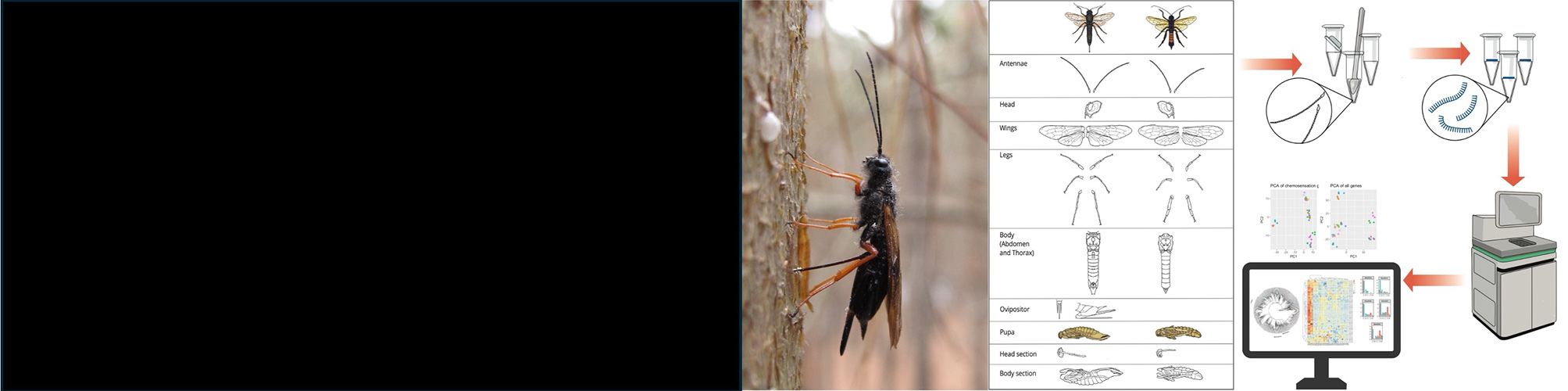
Postma A, Klynsmith L, Duong TA, Allison JD, Smidt W, Waterhouse RM, Lesny P, Oeyen JP, Petersen M, Martin S, Liu S, Zhou X, Ziesmann T, Donath A, Mayer C, Misof B, Niehuis O, Peters RS, Podsiadlowski L, Coetzee MPA, Joubert F, Slippers B. (2026) Genome and transcriptome-based identification and expression profiling of chemosensory gene families across developmental stages and tissues in Sirex noctilio (Hymenoptera: Siricidae). Insect Molecular Biology :1-14. 10.1111/imb.70029
Aylward J, Visagie CM, Roets F, Wingfield BD, Wingfield MJ. (2026) Genome analyses reveal two novel species of Seiridium from Acacia mearnsii. Mycological Progress 25:8. 10.1007/s11557-026-02121-7
Liu QL, Wingfield MJ, Duong TA, Wingfield BD, Crous PW. (2026) Taxonomy, distribution and dispersal of Calonectria species: Important pathogens of forestry, agricultural and horticultural crops. Current Forestry Reports 12(4) 10.1007/s40725-025-00262-8
Nethononda PD, Hurley BP, Slippers B, Makhura MN. (2026) Smallholder farmers’ knowledge, perception and management of Spodoptera frugiperda (Lepidoptera: Noctuidae) on Zea mays at irrigation schemes in Limpopo province, South Africa. Crop Protection :107457. 10.1016/j.cropro.2025.107457
Swanepoel S, Naidoo S. (2026) A weighted gene co-expression network analysis characterises the common defence responses of Eucalyptus to diverse biotic challenges. Scientific Reports 16:5387. 10.1038/s41598-025-32699-z
Addikah C, Abubeker H, Mukiibi A, Bairu M, Amelework A, Van der Laan M, Mangani R. (2026) Current and future potential of cassava (Manihot esculenta) in Southern Africa: a scoping review. 4:120. 10.1007/s44279-026-00598-0
Botha I, De Canha MN, Oberlander K, Botes J, Lall N, Berger DK. (2025) DNA barcoding and anti-tyrosinase activities of three species-representative populations of the genus Greyia Hook & Harv. South African Journal of Botany 189:55-67. 10.1016/j.sajb.2025.11.035
Thomas C, Wilken PM, Coetzee MPA, Visagie CM. (2025) Advancing the taxonomy of Sclerotinia (Helotiales, Sclerotiniaceae): a review and recommendations for an important plant-pathogenic genus. IMA Fungus 17:e175737. 10.3897/imafungus.17.175737
Townsend G, Hill M, Hurley BP, Nel WJ, Crous C, Roets F. (2025) First report of the ambrosia beetle, Amasa parviseta (Curculiondae: Scolytinae), in South Africa. African Entomology 10.17159/2254-8854/2025/a24167 PDF
Roux J, del M Angel L, Barnes I. (2025) First report of the eucalypt stem canker pathogen Teratosphaeria gauchensis in South Africa. New Disease Reports 52(2):e70091. 10.1002/ndr2.70091
Nel WJ, Barnes I, Jali S, Impson F, Oberprieler RG, Hurley BP. (2025) First report of Melanterius inconspicuus (Coleoptera: Curculionidae: Cleogonini) from KwaZulu-Natal, South Africa, with observations of its development in black wattle. Southern Forests 10.2989/20702620.2025.2537823 PDF
Regasa K, Beze W, Anjulo A, Wondafrash M, Hurley BP, Lawson SA, Healey M, Germishuizen I. (2025) Evaluating fungicides for the management of rust (Uromycladium acaciae) on black wattle nursery seedlings in Awi zone, Amhara regional state, Ethiopia. International Journal of Forestry Research 10.1155/ijfr/5547814
Ramantswana TM, Malatji DP, Pierneef RE, Soma P, Van Der Nest MA, Muchadeyi FC. (2025) Differential gene expression analysis of Dohne Merino sheep naturally infected with Haemonchus contortus. Scientific Reports 15:41843. 10.1038/s41598-025-25782-y
Nadasen T, Buitendag C, Visser R, Welgemoed T, Hein I, Berger DK. (2025) A latent invader: transcriptomics reveals Cercospora zeina’s stealth infection strategy of maize and immune-activating effectors. Frontiers in Plant Science 16:1-23. 10.3389/fpls.2025.1703682
Wilson AM, Wingfield MJ, Duong TA, Wingfield BD. (2025) Thermotolerance and post-fire growth in Rhizina undulata is associated with the expansion of heat stress-related protein families. BMC Genomics 26:1041. 10.1186/s12864-025-11902-5
Fuchs T, Vismer HF, Visagie CM, Wingfield BD, Wingfield MJ. (2025) Low genotypic diversity and first reports of clinical Sporothrix from retrospective samples in South Africa. Medical Mycology 10.1093/mmy/myaf102
Yilmaz N, Verheecke-Vaessen C. (2025) Mycotoxins: An ongoing challenge to food safety and security. PLOS Pathogens 21(11) 10.1371/journal.ppat.1013672
Coelho MA, David-Palma M, Kachalkin AV, Kolařík M, Turchetti B, Sampaio JP, Wingfield MJ, Fisher MC, Yurkov AM, Heitman J. (2025) Genomic and phenotypic insights into the expanding phylogenetic landscape of the Cryptococcus genus. PLOS Genetics 21(11) 10.1371/journal.pgen.1011945 PDF
Ramatsitsi NM, Manyevere A, Motloba T. (2025) Myco-ecological warfare with Meloidogyne species. Archives of Agronomy and Soil Science 71(1):1-15. 10.1080/03650340.2025.2579892 PDF
Lane FA, Wingfield BD, Wingfield MJ, Wilken PM. (2025) Mating-type locus structure affects gene expression in unidirectional mating-type switching fungi. bioRxiv 10.1101/2025.10.10.681704
Shaw PL, Slippers B, Wingfield BD, Laurent B, Penaud B, Wingfield MJ, Crous PW, Bihon W, Duong TA. (2025) Chromosome-level genome assemblies for the latent pine pathogen, Diplodia sapinea, reveal two accessory chromosomes with distinct genomic features and evolutionary dynamics. G3 Genes|Genomes|Genetics :jkaf239. 10.1093/g3journal/jkaf239 PDF