





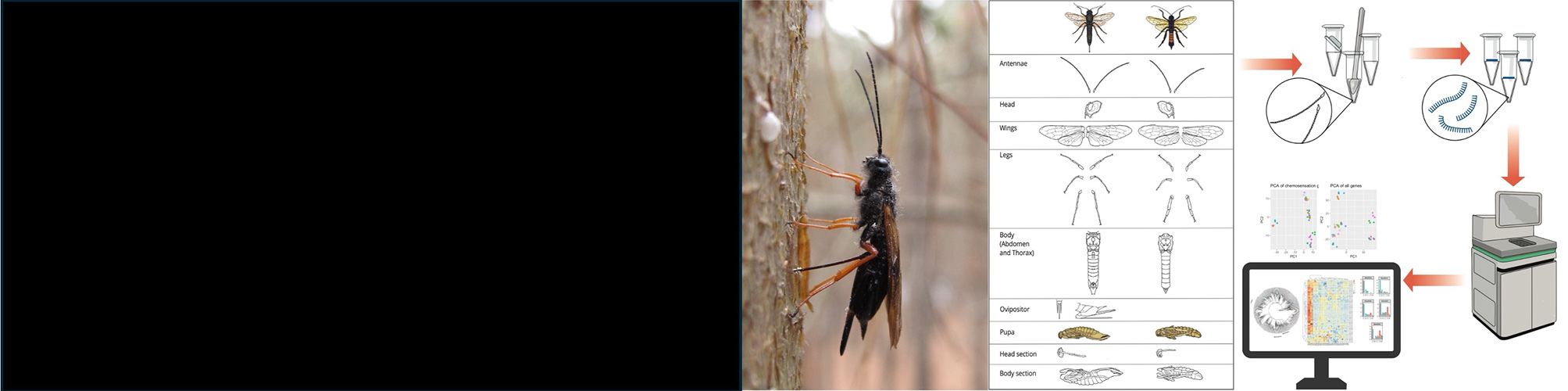

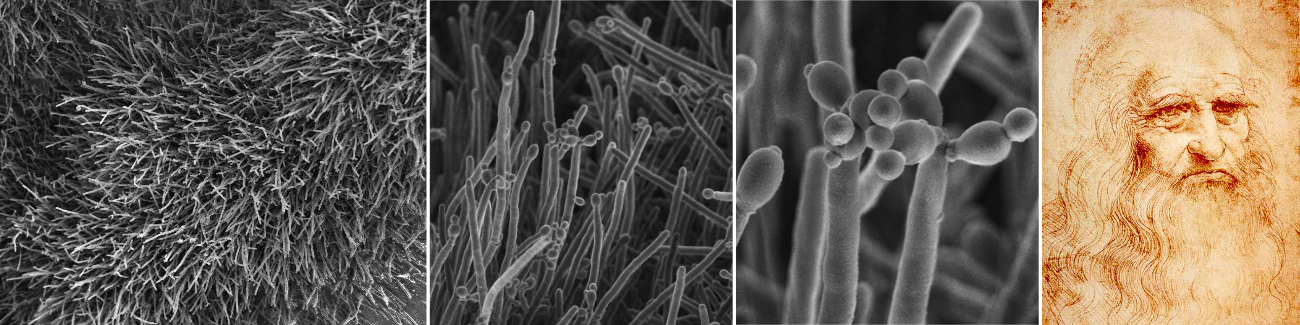
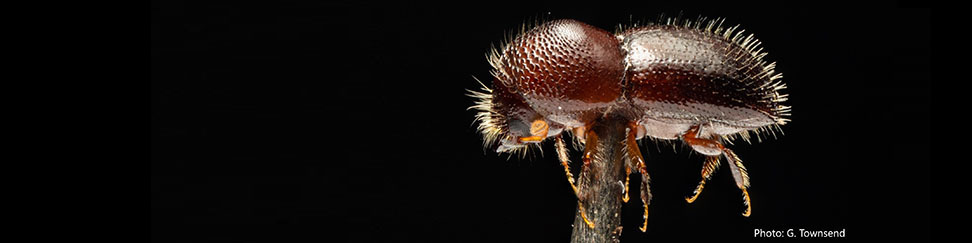
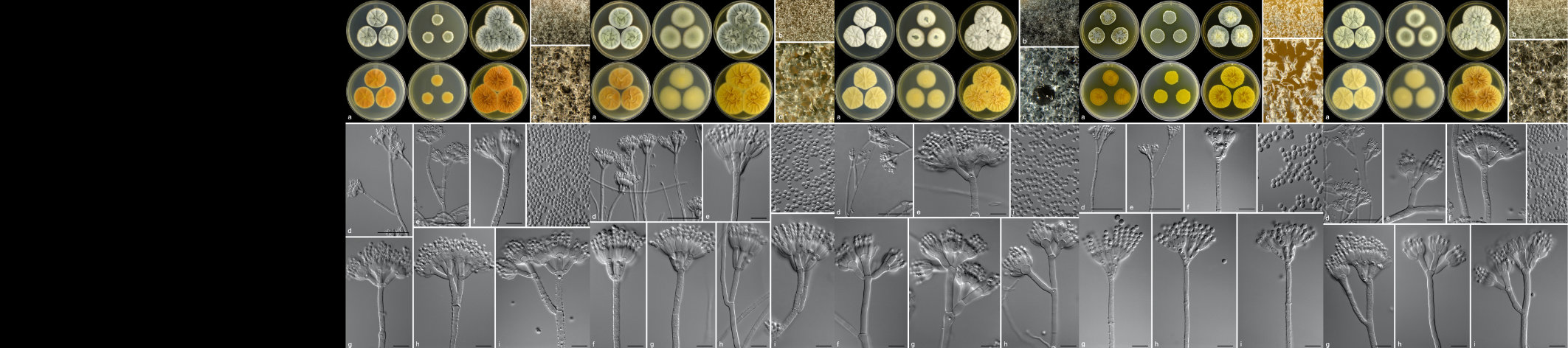
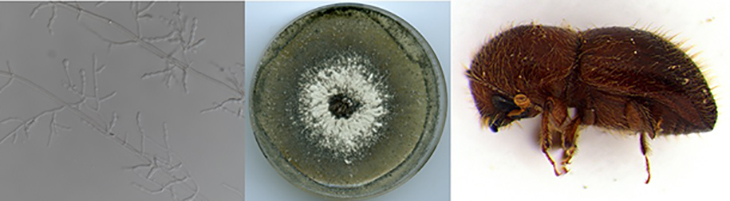
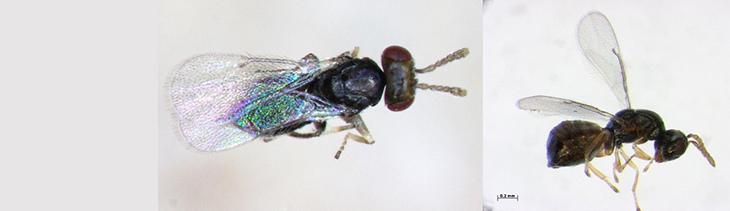
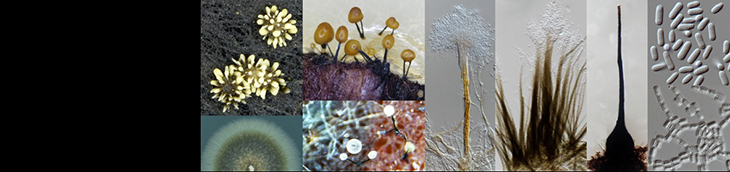
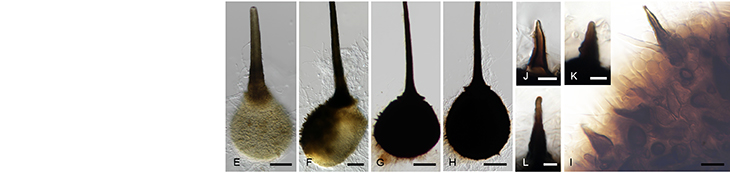
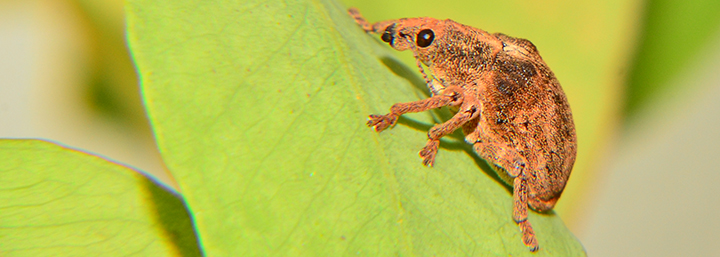

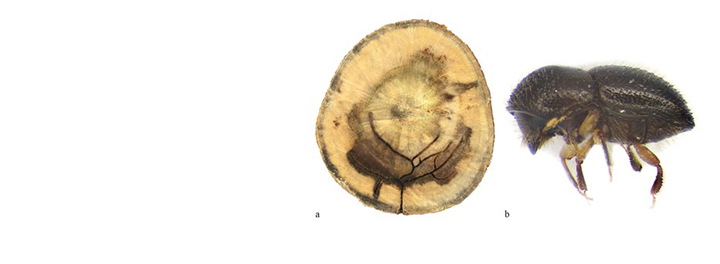


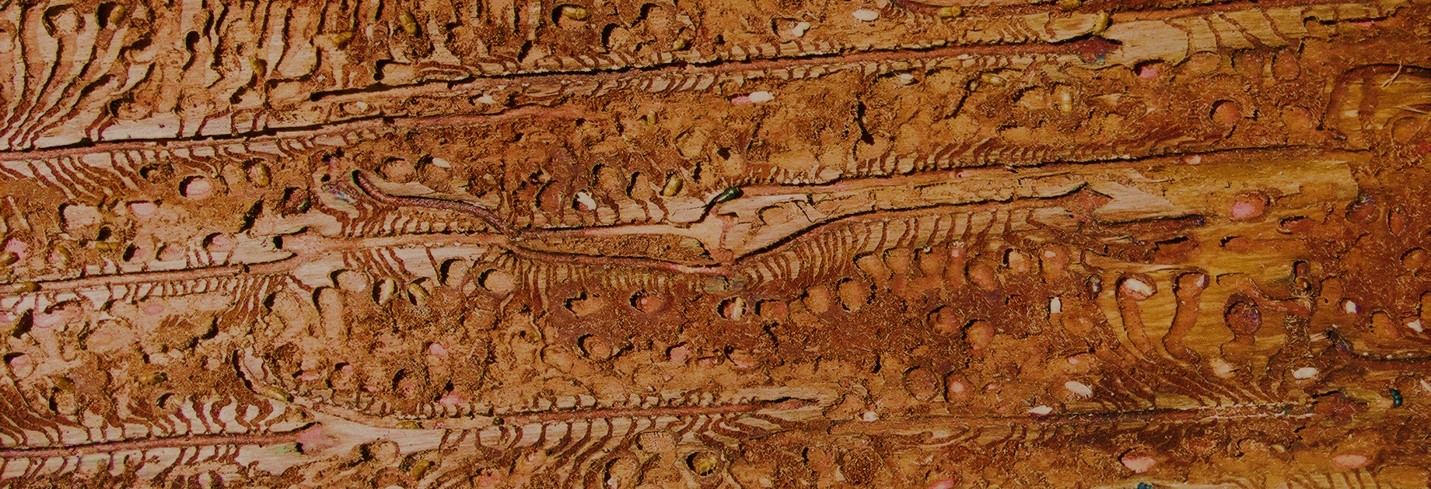


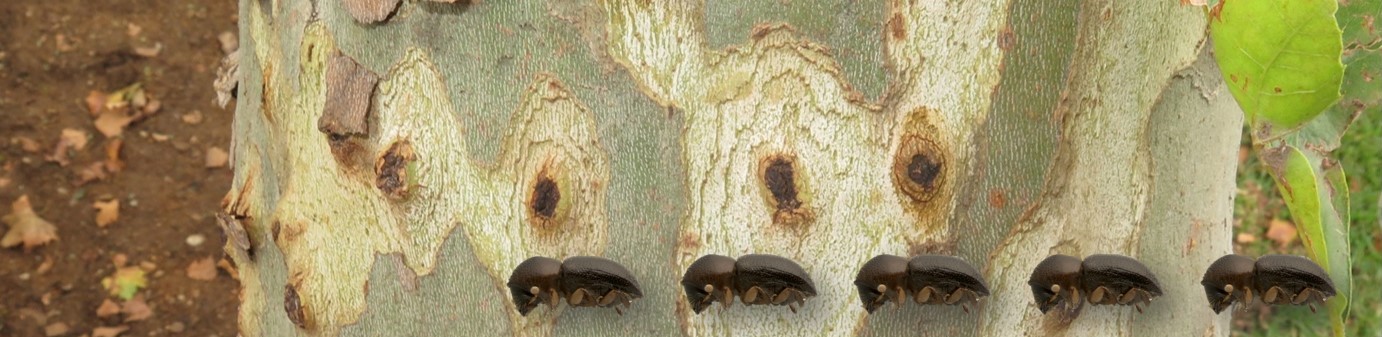
Three bark beetles, Orthotomicus erosus, Hylurgus ligniperda and Hylastes angustatus are known to infest pines in South Africa. All three insects carry pathogenic fungi, most of which belong to the genera Ophiostoma and Leptographium. These pathogenic fungi are transmitted to any wood infested by the beetles. All three pine bark beetles colonise stressed trees. The fungi associated with these insects are thought to be important in the development and reproduction of the insects.
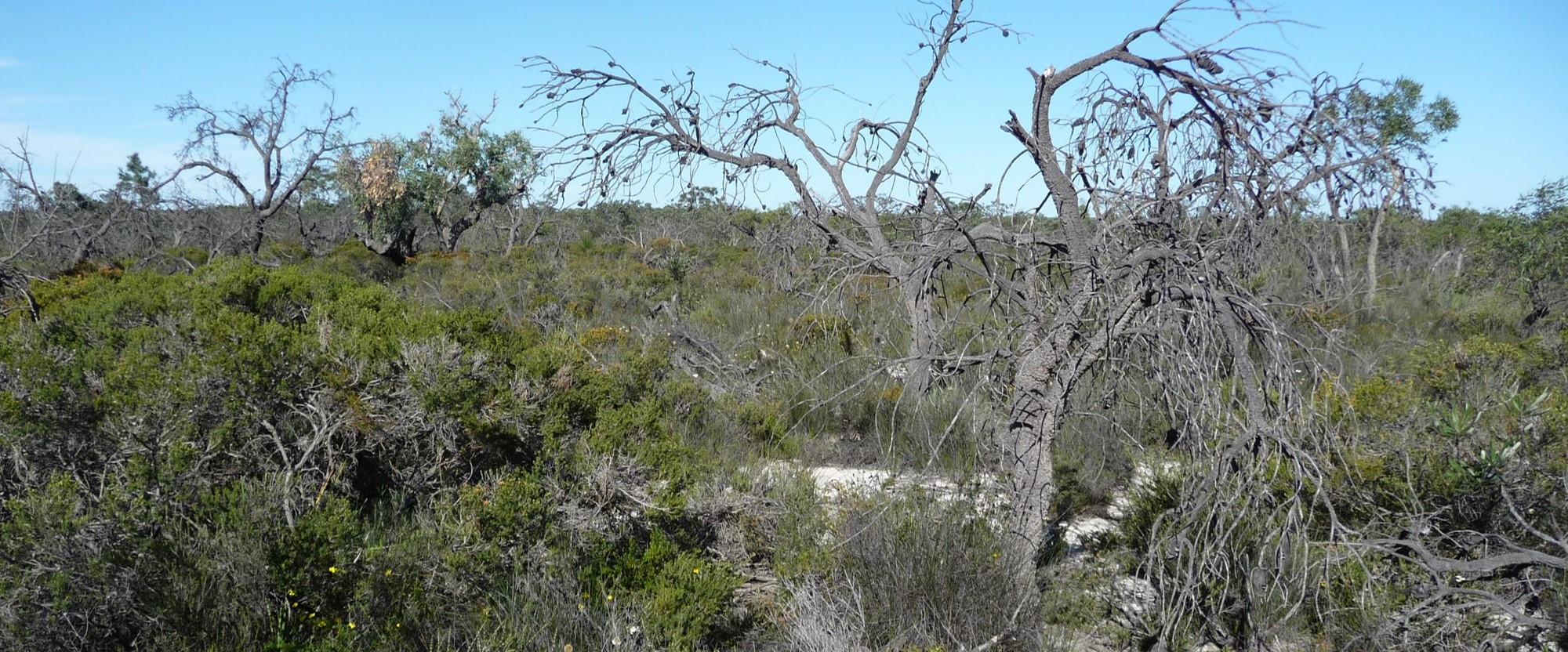
Some common fungi infect tree roots but do not cause sufficient damage to result in tree death. Roots can, however, become infested with insects such as Hylurgus ligniperda and Hylastes angustatus which, together with their pathogenic fungal associates, contribute to tree death. These diseases are complex and require a sequence of events before trees are killed. Orthotomicus erosus infests stressed or dying trees. Ophiostoma spp. and particularly O. ips which they carry, appears to play an important part in the establishment of the insects in trees. In some cases the insects may also attempt to penetrate slightly stressed trees.
Insects can also stress trees, making them susceptible to infections by opportunistic fungi such as Diplodia pinea (Wingfield and Knox-Davies 1980). Where the black pine aphid, Cinara cronarti, has stressed trees, these can be infected and killed by D. pinea. Diplodia pinea can infect wounds as well as healthy pine tissue. Some insects such as the pine weevil Pissodes nemorensis feed on tree tops and provide wounds for D. pinea infection and disease development.