



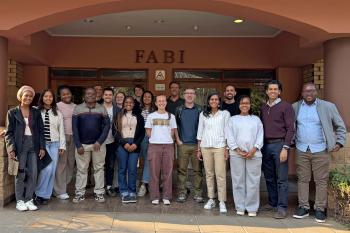

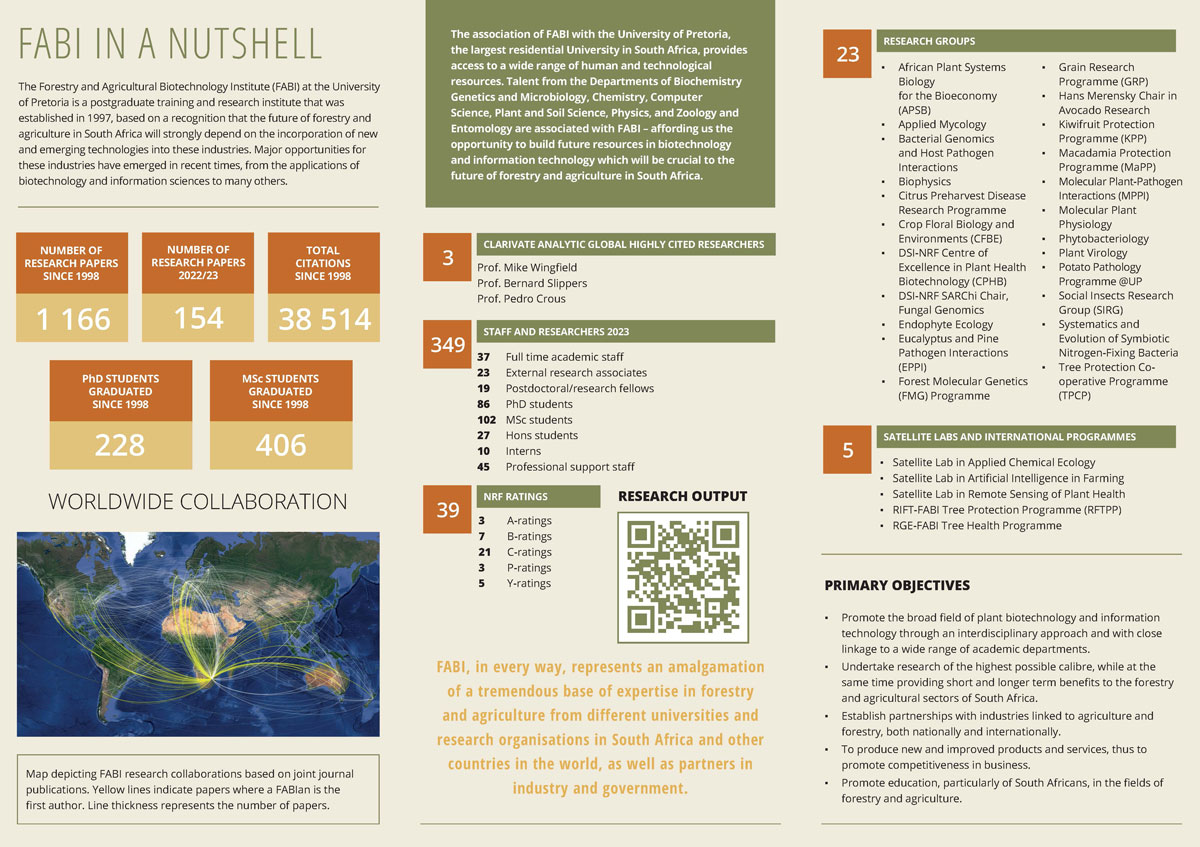














The Molecular Plant-Pathogen Interactions (MPPI) Group is located in the Plant Sciences Complex at the University of Pretoria. The group is part of the Department of Plant & Soil Sciences and the Forestry and Agricultural Biotechnology Institute (FABI) and is headed by Prof Dave Berger. Research focuses on the molecular basis of plant-pathogen interactions and the mechanisms of plant defence using a range of approaches from whole plant phenotyping to functional genomics, as well as developing bioinformatics tools. The MPPI group has particular experience in transcriptomics using microarrays and RNAseq.
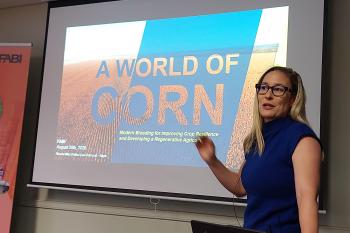
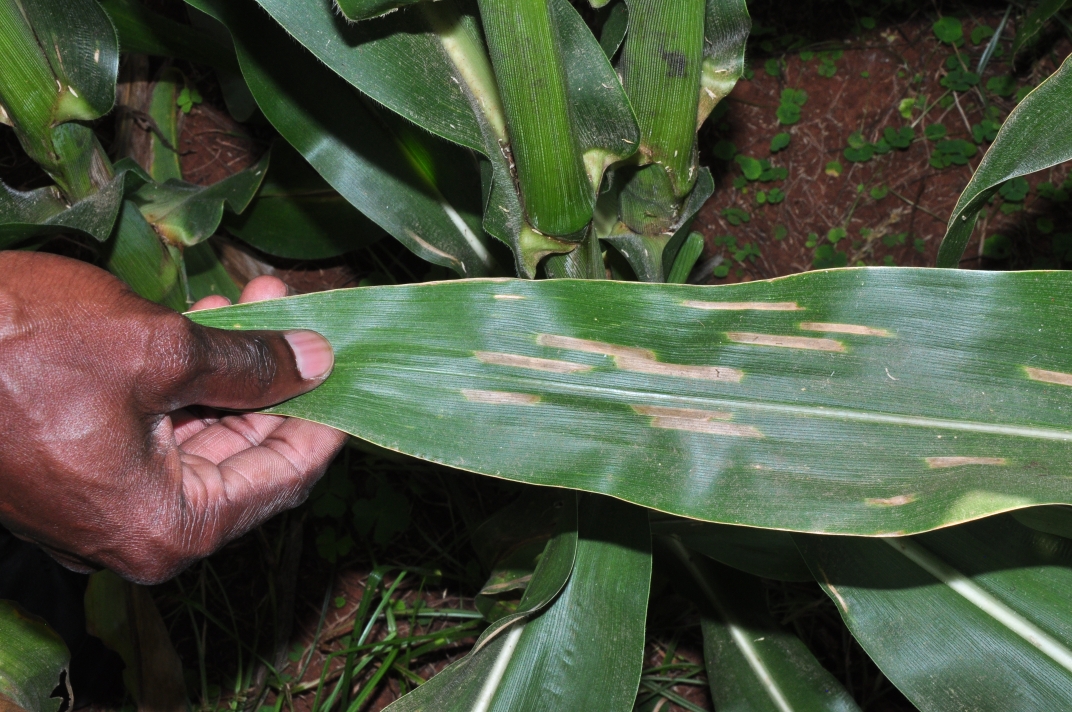
The main research projects in the MPPI lab involves maize, the staple food of sub-Saharan Africa. We are interested in understanding mechanisms underlying quantitative disease resistance in maize to grey leaf spot (GLS) disease. GLS is an important constraint to maize production in many maize growing regions of the world, particularly in Africa.
We collaborate with maize breeders and field pathologists to understand the disease in its Agricultural context, which gives postgraduate students the opportunity to temporarily "escape" from the lab. Apart from glasshouse bioassays, the MPPI group is employing genomics, such as high density molecular markers, and transcriptomics to study maize defence mechanisms against GLS, with the long term aim to develop tools for maize improvement, such as marker assisted selection.
The MPPI group is also elucidating pathogenicity strategies employed by Cercospora zeina, the causal agent of GLS. We are taking a comparative genomics approach, through whole genome sequencing of C. zeina isolates. The research is followed up using functional genomics tools. In addition, we are carrying out genetic diversity studies of C.zeina on the African continent and globally.
The MPPI group is also applying genomics to understand the biology and genetic diversity of the medicinally-important bottlebrush tree genus Greyia, which is endemic to South Africa.
The MPPI group is hosted in the Plant Sciences Complex with excellent laboratories for plant biotechnology research, and access to phytotron and glasshouse facilities. Several bioinformatics software packages and databases have been developed by the group in collaboration with the Centre for Bioinformatics and Computational Biology at the University of Pretoria.