









FABI News

FABI Events

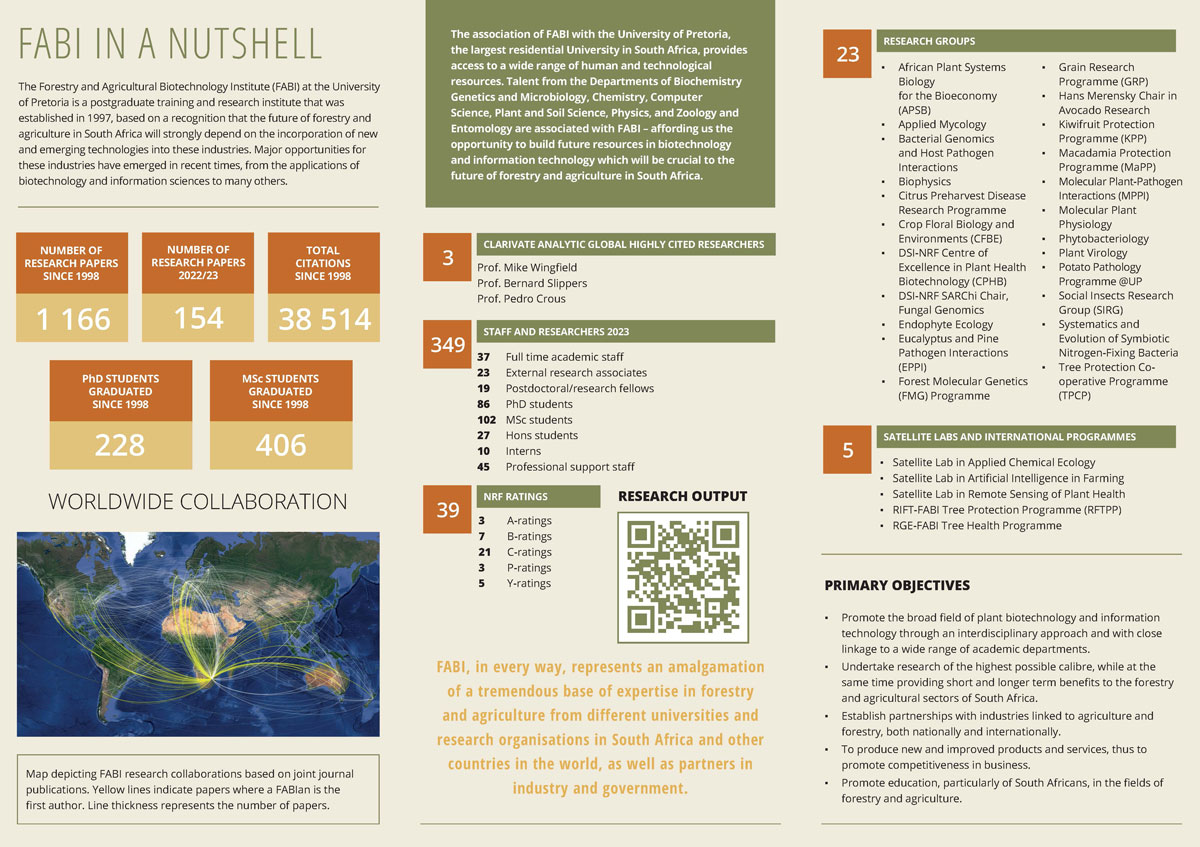
FABI in a nutshell

Research Features


http://www.seedtest.org

Uniformity in Seed Testing

ISTA is committed to developing, adopting and publishing standard procedures for sampling and testing seeds, and promoting uniform application of these procedures for evaluation of seeds moving in international trade.

Objectives of the Association

Following the ISTA Constitution the objectives of the Association are:

(a) The primary purpose of the Association is to develop, adopt and publish standard procedures for sampling and testing seeds, and to promote uniform application of these procedures for evaluation of seeds moving in international trade.(b) The secondary purposes of the Association are actively to promote research in all areas of seed science and technology, including sampling, testing, storing, processing, and distributing seeds, to encourage variety (cultivar) certification, to participate in conferences and training courses aimed at furthering these objectives, and to establish and maintain liaison with other organisations having common or related interests in seed.

Who is ISTA

The International Seed Testing Association was founded in 1924 during the 4th International Seed Testing Congress held in Cambridge, United Kingdom. Currently it's membership consists of about 176 member laboratories, 48 personal members and 22 associate members, from 74 countries around the world. ISTA is independent and acts free from economic interest and political influence, it is unbiased, objective and fair. Furthermore, the hitherto unsurpassed expertise of ISTA is based on the non–profit, cooperation of the international community of approximately 400 experienced, competent and energetic seed scientists and analysts.

What does ISTA do

As an authority in seed science and technology, ISTA continues its role as the developer of seed testing methods. Its major achievements and services provided to date are briefly the following:


  • The ISTA International Rules for Seed Testing, guaranteeing worldwide annually updated, harmonised, uniform, seed testing methods
  • The ISTA Accreditation Programme including Accreditation Standard, Proficiency Testing Programme and Auditing Programme guaranteeing worldwide harmonised, uniform, seed testing
  • The issuing of the ISTA International Seed Lot Certificates by officially independent ISTA accredited and authorised laboratories
  • The promotion of research, training, publishing and information in all areas of seed science and technology and cooperation with related organisations such as ISF, OECD, UPOV and many others


Benefits

  • Provides the basis for ensuring the trade of quality seed by developing standard seed testing methods
  • Provides a platform for research and cooperation between seed scientists worldwide
  • Promotes research and provides the opportunity for publishing and distributing of the technological data
  • Guarantees worldwide harmonised, uniform seed testing through the Accreditation, Proficiency Test and Auditing Programmes
  • Provides services and professional development programmes for furthering the education and experience of seed analysts around the world
  • Provides an unbiased voice in the seed industry


Membership profile

The ISTA membership consists of about 210 personal members and 162 member laboratories, of which 95 laboratories are ISTA accredited. The membership is a collaboration of seed scientists and seed analysts from universities, research centres and governmental, private and company seed testing laboratories around the world. ISTA values and promotes the diversity of membership, this being the basis for its independence from economic and political influence.


Management of the Association

ISTA is managed and directed by an Executive Committee, comprising of a President, 1st and 2nd Vice President, and 8 members–at–large. All Executive Committee members are designated members of ISTA.
 
The finances and administration of the association is managed by the ISTA Secretariat, based in Switzerland. This is lead by the Secretary General and 8 staff members.

Technical Committees

14 subject–focused Technical Committees and 1 Task Force are responsible for the development of new methodology for seed testing. The Technical Committees are made up of approximately 200 energetic members, many of which are active in more than one committee. Each committee is headed by a chair and vice chair.
 
ISTA Technical Committees include Bulking and Sampling, Flower Seed Testing, Forest Tree and Shrub Seed, Germination,  Moisture, Nomenclature, Seed Health, Purity, Rules, Statistics, Seed Storage, Tetrazolium, Variety, Vigour and the GMO Task Force.


Contacting details:
ISTA Secretariat
Zürichstrasse 50
8303 Bassersdorf
CH – Switzerland

Phone +41 44 838 6000
Fax +41 44 838 6001
E–mail ista.office(at)ista.ch

New Publications

Nadasen TR, Hein I, Berger DK. (2026) Structural phylogenetics identifies conserved effector families and cell death-inducing proteins from Cercospora zeina. Molecular Plant-Microbe Interactions First Look 10.1094/MPMI-05-26-0048-R
Mbamali SKS, Mohlomi N, Van Der Nest MA, Mchunu NP, Permaul K. (2026) Reciprocal Genome Projection Reveals Reference-Conditioned Functional Variation in Clinical Aspergillus Section Nigri Isolates. Pathogens 10.3390/pathogens15090941
Schertler A, Lenzner B, Dullinger S, Moser D, García-Rodríguez A, Krisai-Greilhuber I, Voglmayr H, Bufford JL, Santini A, Ghelardini L, Capinha C, Reino L, Wingfield MJ, Thines M, Talhinhas P, Dawson W, van Kleunen M, Kreft H, Pergl J, Pyšek P, Weigelt P, Winter M, Essl F. (2026) Are novel and co-xenic associations common in alien fungal and fungus-like plants pathogens?. New Phytologist 10.1111/nph.71455
Thango S, Nsibo DL, Berger DK, Visagie CM, Slippers B. (2026) Phenotypic variation in the in vitro and in planta aggressiveness traits among Exserohilum turcicum strains from South Africa. Plant Pathology 75(4):e70257. 10.1111/ppa.70257
Bradshaw MJ, Paul A, Villani S, Bensch K, Mitchell KJ, Pfister DH, Visagie CM, Garfinkel AR, Quesada-Ocampo L, Aime MC, Braun U. (2026) Modern taxonomy as the foundation for identifying and managing fungal and fungus like plant pathogens. Plant Disease 10.1094/PDIS-12-25-2537-FE
Balocchi F, Wingfield MJ, Paap T. (2026) Occurrence of Phytophthora cinnamomi in the rhizosphere of declining Leucadendron elimense subsp. salteri in South Africa. Forest Pathology 56(4):e70097. 10.1111/efp.70097 PDF
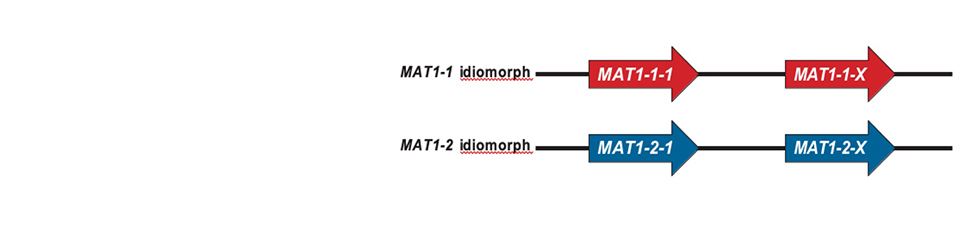
Pham NQ, Wingfield BD, Marincowitz S, Marpaung YMAN, Selebi AP, Tarigan M, Wingfield MJ. (2026) A novel Cryphonectria species (Cryphonectriaceae, Diaporthales) discovered on Eucalyptus, including insights into the mating biology of the genus. Fungal Biology 130:101831. 10.1016/j.funbio.2026.101831
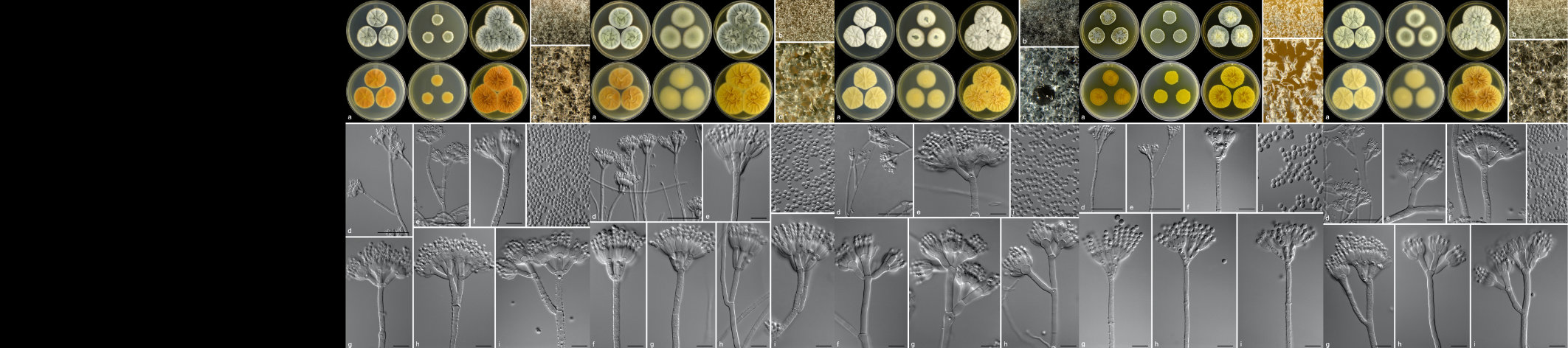
Kim JS, Lee W, Seo CW, Lee JW, Perera RH, Rho SM, Visagie CM, Houbraken J, Lim YW. (2026) A comprehensive assessment of Penicillium diversity in marine environments. Studies in Mycology 115:1–57. 10.3114/sim.2026.115.01
Jami F, Truter M, Pavlic M, Chen SF, Roux J. (2026) Identification of Botryosphaeriaceae species in the South African National Collection of fungi, including a novel species of Oblongocollomyces. African Biodiversity & Conservation 56(1):1-13. PDF
Vettraino AM, Bose T. (2026) Urban green spaces as emerging hotspots for Phytophthora diversity: a global synthesis of host associations, distribution and management gaps. Frontiers in Forests and Global Change 9:1872981. 10.3389/ffgc.2026.1872981
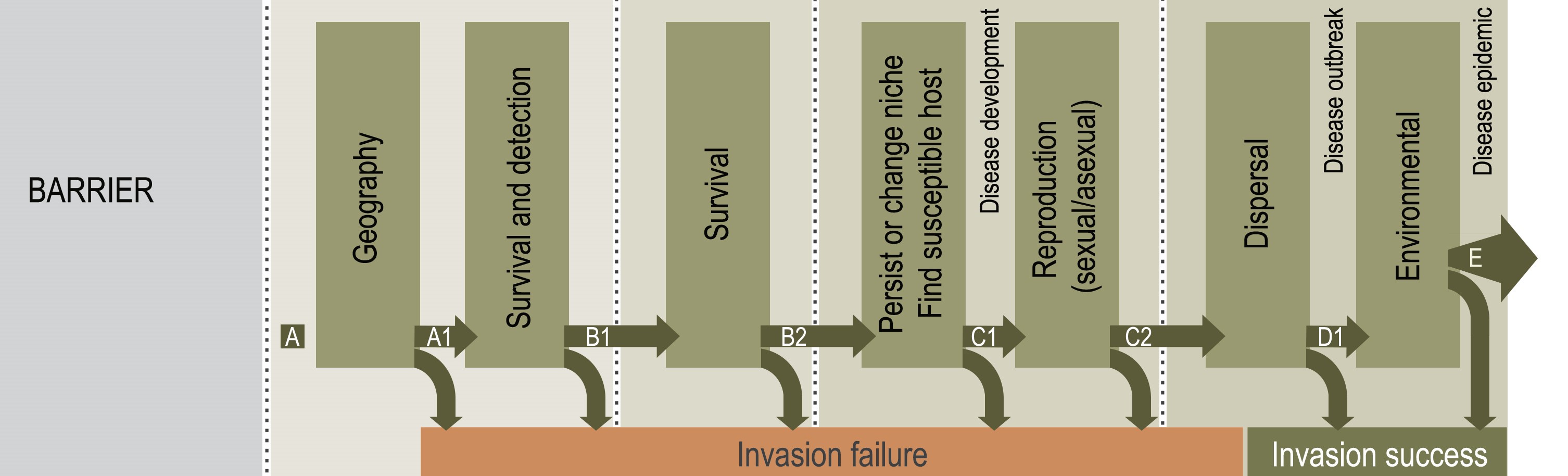
Burgess TI, Wingfield MJ. (2026) Unveiling a hidden menace: Invasive tree pathogens, less known but increasingly threatening Southern hemisphere forests. Annual Review of Phytopathology 64 10.1146/annurev-phyto-011325-100959
Motete T, Solís M, Hammerbacher A, Naidoo S. (2026) Gene expression profiling in Eucalyptus associates Phenylpropanoid resistance to Teratosphaeria destructans. Plant Pathology 10.1111/ppa.70207
Aylward J, Atkins S, Roets F, Danti R, Della Rocca G, Emiliani G, Fraser S, Garbelotto MM, Herron DA, Scali E, Wingfield BD, Wingfield MJ. (2026) High genetic diversity in the Cypress canker pathogen Seiridium cardinale in the Southern Hemisphere. Plant Pathology 75 10.1111/ppa.70212
van Heerden A, Pham NQ, Duong TA, Wingfield MJ, Wingfield BD. (2026) Draft genome sequence of Ganoderma philippii, a serious root rot pathogen of Eucalyptus in Southeast Asia. Australasian Plant Pathology 55:81. 10.1007/s13313-026-01159-1
Schoeman C, Roodt D, Mc Menamin A, Bezuidt O, Dithugoe C, Pinard D, Mizrachi E. (2026) Conserved symbiosis-associated genes in the cycad Encephalartos natalensis suggest co-option for cyanobacterial symbiosis. New Phytologist 10.1111/nph.71311
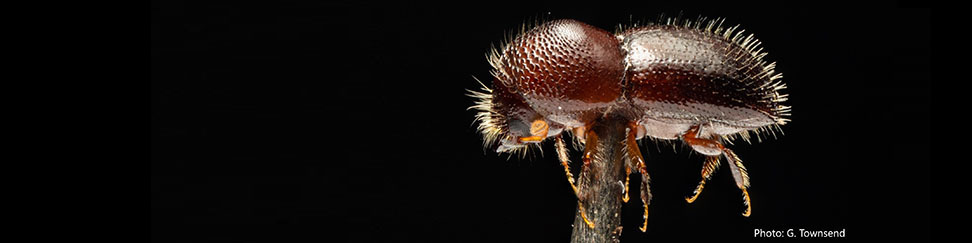
Townsend G, Hill M, Hurley BP, Roets F. (2026) Native Scolytinae and Platypodinae beetle assemblages in indigenous South African forests and their co-occurrence with the invasive PSHB beetle. Journal of Insect Conservation 30 10.1007/s10841-026-00779-8
Botha I, Maduna SN, Hagen SB, Lall N, Berger DK. (2026) 3RAD-guided SNP discovery for species identification and conservation of the medicinal southern African tree Genus Greyia Hook. & Harv.. Ecology and Evolution 16(5):e73412, 1-29. 10.1002/ece3.73412
Balocchi F, Duncan G, Yilmaz N, Wingfield MJ, Paap T. (2026) The critically endangered geophyte Gladiolus aureus threatened by a wilt disease associated with Fusarium libertatis. Journal of Plant Pathology 10.1007/s42161-026-02227-7 PDF
Bose T, Wingfield MJ. (2026) Plantations are invasive pathogen bridgeheads—response to Li et al.. Trends in Ecology & Evolution 10.1016/j.tree.2026.05.006
Jamieson B-A, Paap T, Pegg GS, Carnegie AJ, Wingfield MJ, Roux J, Hardy GEStJ, Drenth A, Hammerbacher A, Bose T. (2026) Quambalaria spp.: Emerging Tree Pathogens of Concern. Current Forestry Reports 12:13. 10.1007/s40725-026-00274-y
Masuku SK, De Vos L, Thabiso TE, Steenkamp ET, Wingfield BD. (2026) Baseline sensitivity of South African Fusarium circinatum to tebuconazole. Journal of Plant Pathology 10.1007/s42161-026-02197-w
Fitawek W, Anjulo A, Healey M, Lawson SA, Hurley BP. (2026) The Moringa value chain in Ethiopia and the socio-economic impact of pests and diseases. CABI Agriculture and Bioscience 10.1079/ab.2026.00041 PDF
Lynn KMT, Wingfield MJ, Oliveira LSS, Alfenas AC, Ferreira Alfenas RF, Marincowitz S, Barnes I. (2026) Phylogenetic and population genetic analyses reveal patterns of divergence amongst isolates of Ceratocystis manginecans. Ecology and Evolution 16 10.1002/ece3.73652
Dlamini CM, Matongera TN, Lawson SA, Healey M, Tanga A, Regasa K, Kassie W, Hurley BP, Germishuizen I. (2026) Modelling spatiotemporal dynamics of wattle plantations in northwestern Ethiopia using harmonised PlanetScope and RapidEye imagery. Trees, Forests and People 25:101293. 10.1016/j.tfp.2026.101293 PDF
Ndou M, Potts WM, Duong TA, Teske PR, Childs AR, Henriques R. (2026) Conspecific scaffold-level genome assembly outperforms heterospecific chromosome-level assemblies for assessing genetic indicators in a threatened marine fish. Evolutionary Applications 19:e70247. 10.1111/eva.70247
Marx B, van Dijk A, Steenkamp ET, Wingfield MJ, Wingfield BD. (2026) Breaking the mould: Cellulose in the cell walls of the Ophiostomatales. Fungal Biology Reviews 57 10.1016/j.fbr.2026.100489
Wingfield BD, Coetzee MPA, Wingfield BJ, Groenewald M, Pohl C, Wingfield MJ. (2026) The genetic blueprint of Cyclohexamide resistance: Analysis of 816 yeast species. Research Square 10.21203/rs.3.rs-9313202/v1
Paap T, White D, Bose T, Burgess TI. (2026) Diversity and phylogeny of Phytophthora Clade 9, including descriptions of three novel species. Mycological Progress 25:29. 10.1007/s11557-026-02140-4
Kgatla MM, Barker C, Baxter JR, Bester-van der Merwe AE, Chaisi M, Chakona A, Cherry MI, Daniels SR, Du Preez LH, Haddad CR, Hawkes PG, Ho C, Hoareau TB, Jacobs A, Jacobs K, Janion-Scheepers C, Jansen van Vuuren B, Kabongo RM, Khoza TT, Khumalo NL, Mahlanza T, Makapela L, Makhubo BG, Maneveldt GW, Mashego K, Matcher G, Matthee CA, Mavhunga M, Midgley JM, Mlambo M, Monsanto DM, Mthombeni R, Murray SL, Mynhardt S, Nang-Mba B, Ndlovu M, Parbhu SP, Phetla V, Phukuntsi M, Pitcher TR, Samaai T, Sethusa MT, Simon CA, Sink K, Sole CL, Theron GL, van Asch B, van der Bank M, van Steenderen CJM, Villet MH, Visagie CM, Williams KA, Willows-Munro S, Da Silva JM, Mwale M. (2026) An overview of DNA barcoding of biodiversity in South Africa. PLOS ONE 21(4):e0345173. 10.1371/journal.pone.0345173
Li GQ, Slippers B, Wingfield MJ, Chen SF. (2026) Diversity, distribution and host range of Botryosphaeriaceae in China. Forest Pathology 10.1111/efp.70077