

Research Fellow Represents South Africa at International Biosafety Symposium in Belgium 2025-12-01
From 2-6 November, FABI Research Fellow Dr Gudrun Dittrich-Schröder attended the International Society for Biosafety Research (ISBR) Symposium in Ghent, Belgium. Her participation was made possible through a sponsorship opportunity from CropLife South Africa, which supported two South African researchers to share their genome-editing research on the global ISBR platform.
The ISBR plays a key role in promoting rigorous scientific research to support biosafety assessments by strengthening communication and collaboration among scientists working in modern biotechnology. The society unites a diverse international community of researchers, regulators, and technology developers - spanning supporters and sceptics of biotechnology who are committed to evidence-based dialogue. Its activities cover a broad scope, including molecular studies, field research, and socioeconomic considerations, all aimed at advancing safe and responsible innovation.
The 2025 symposium focused on “exploring the importance of flexible and adaptable global governance and policy frameworks to support rapid advancements in bio-innovation”, with particular emphasis on genetic modification, genome editing, and gene-drive applications across agriculture, bio-industries, and environmental management.
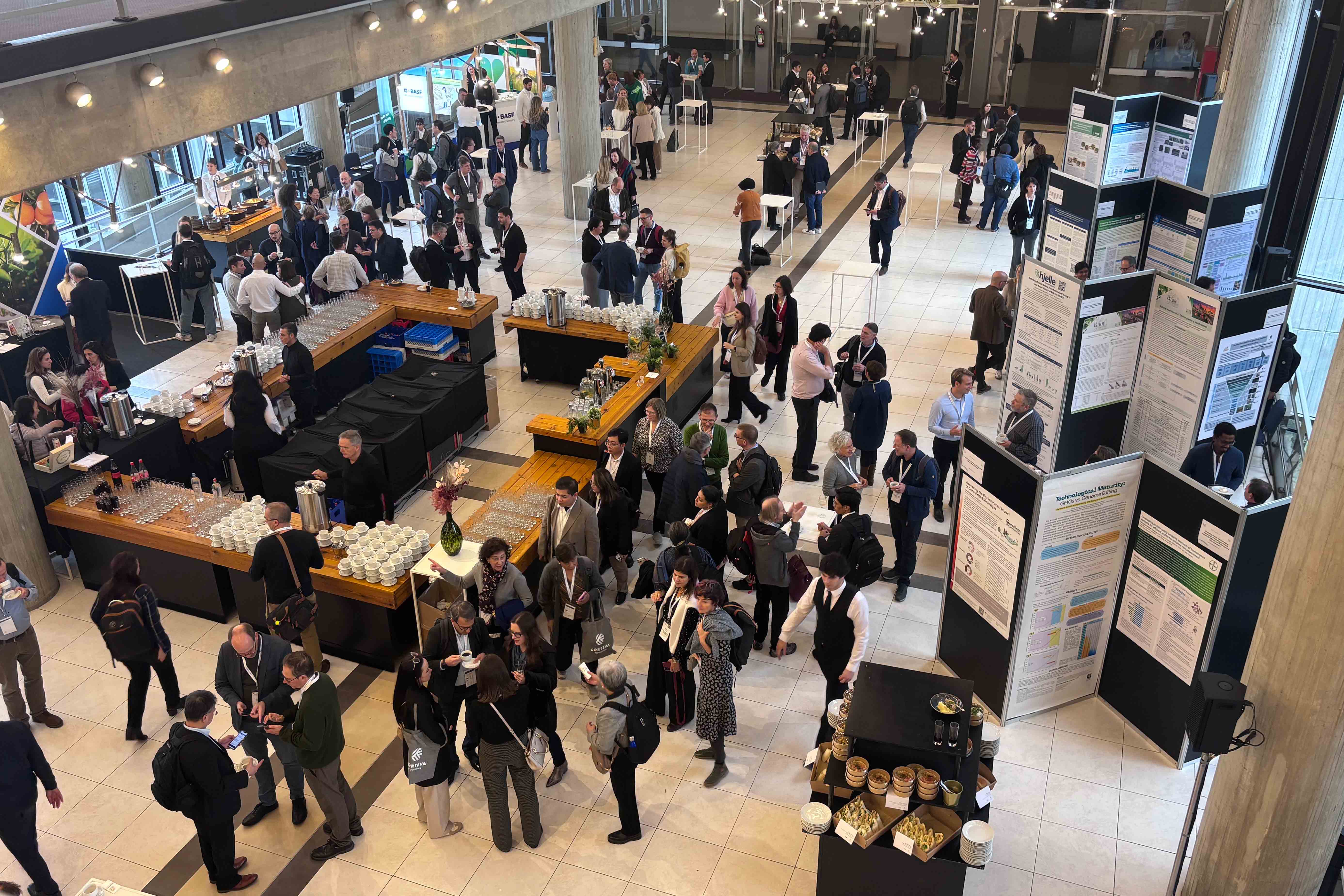
This year’s event attracted 359 attendees, including 38 delegates from Africa and 10 from South Africa.
Plenary sessions explored key themes such as advancing public understanding of bio-innovation, scientific and technological opportunities, global governance and regulatory landscapes, and bio-innovation for sustainability. Highlights included presentations on vitamin- and phytonutrient-fortified tomatoes, gene-edited PRRS-resistant pigs, the global status of animal biotechnology, and genome-edited crops aimed at strengthening food security in Africa.
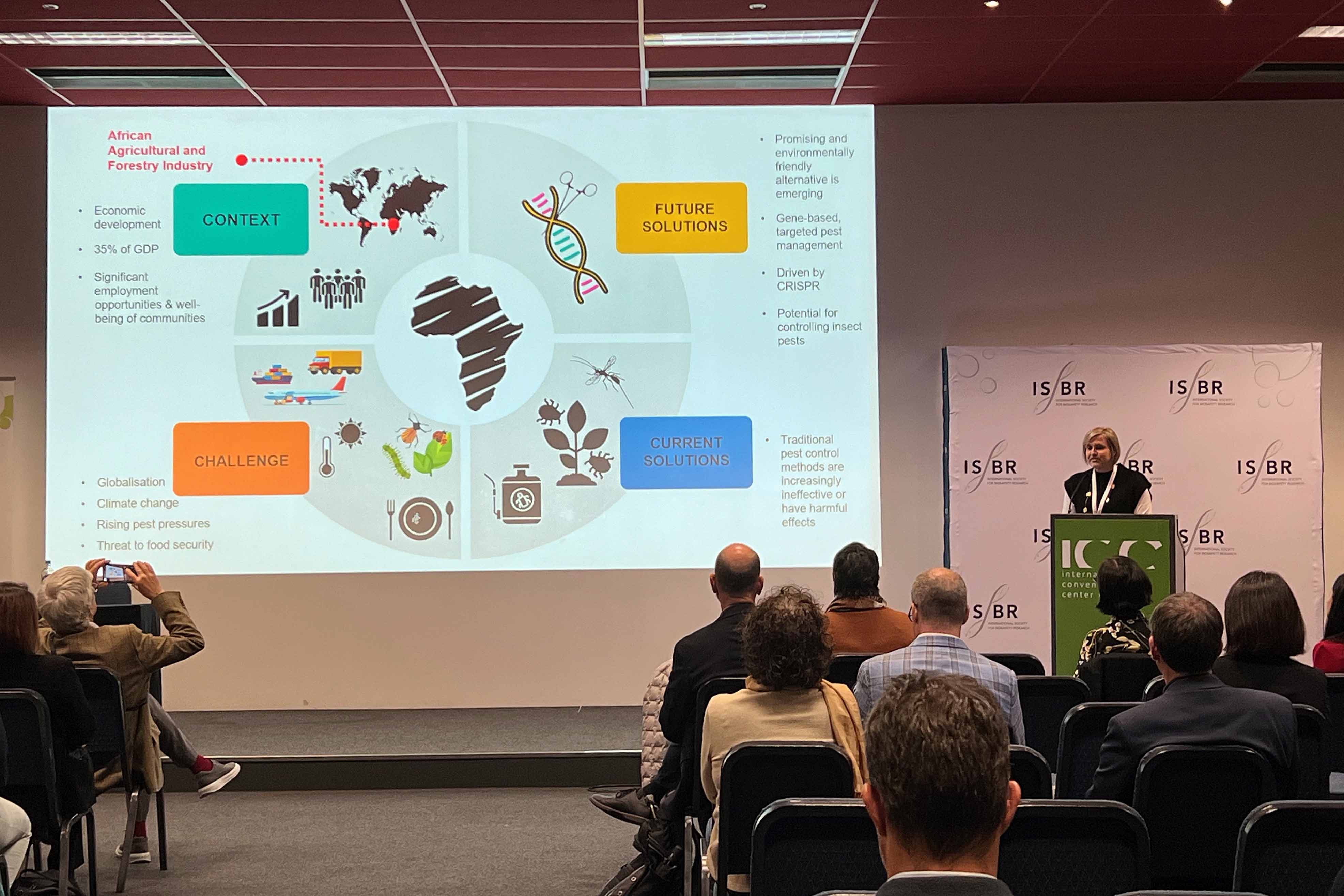
Dr Dittrich-Schröder delivered a presentation titled “Harnessing insect genome editing for a sustainable future: Progress towards the development of agricultural and forestry pest control in South Africa.” Her talk showcased progress made in developing gene-editing approaches for several key insect species, highlighted the urgent need for African researchers to adopt genome-editing tools to counter rising insect-pest pressures, and underscored the importance of building local capacity. She emphasised that realising the potential of these technologies will require clear, science-based regulatory frameworks that balance innovation with biosafety.
Delegates were also offered an optional tour of cutting-edge research facilities, including the VIB laboratories and BASF greenhouse facilities, showcasing advances in biotechnology infrastructure.
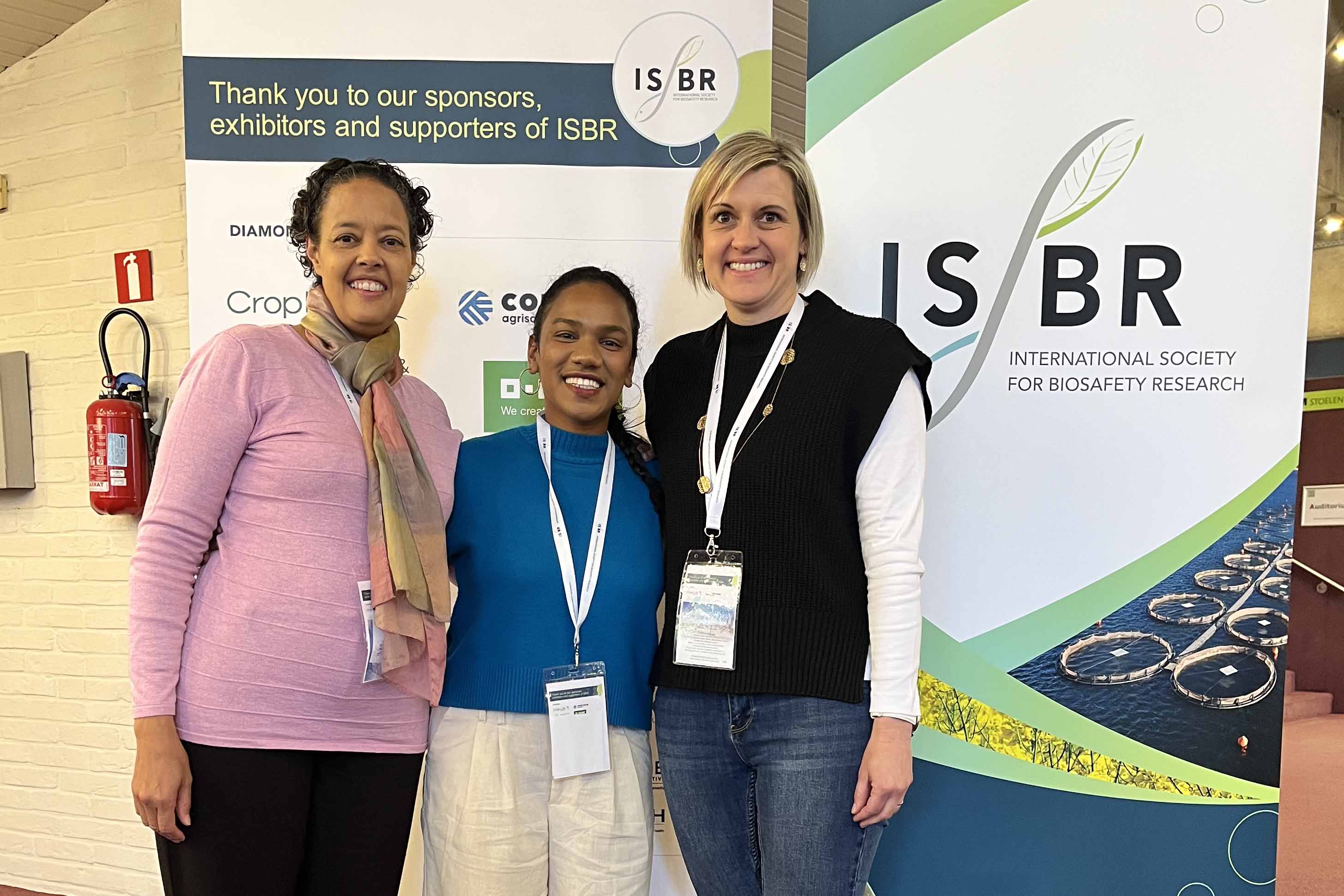
South African representatives (pictured) at the symposium included Chantel Arendse (Lead: Plant Biotechnology, CropLife South Africa), Gretchen Jeftha (Stellenbosch University; sponsorship recipient), and Dr Gudrun Dittrich-Schröder (University of Pretoria).