27 Oct2026


Research Highlights01 / 06
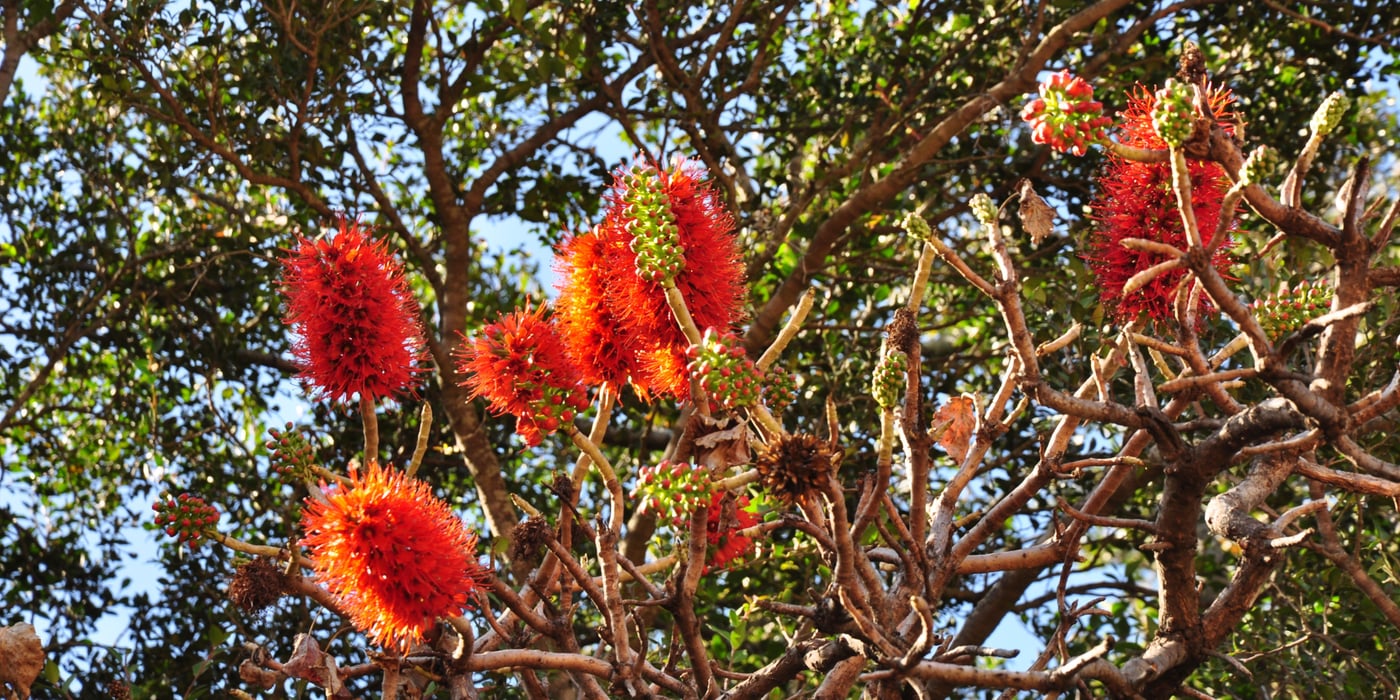
The Plant Journal · 2026Ancient genome duplications shape South Africa’s spectacular Greyia trees
Research Highlights02 / 06
Annual Review of Phytopathology · 2026Diseases such as chestnut blight and Dutch elm disease changed northern forests for good. Treena Burgess and Mike Wingfield warn that the south is losing the isolation that kept it safe, and set out how to act before the next outbreak.
Paper: Unveiling a hidden menace: Invasive tree pathogens, less known but increasingly threatening Southern hemisphere forests
Research Highlights03 / 06
New Phytologist · 2026The red and white fly agaric arrived in South Africa with forestry. By reading the genomes of 24 mushrooms, an international team including FABI researchers traced it to Europe and found its chemical toolkit unchanged, including compounds that kill tiny roundworms.
Paper: Equipped for success: Genomes and metabolites of the European Amanita muscaria are conserved in its novel South African range
Research Highlights04 / 06
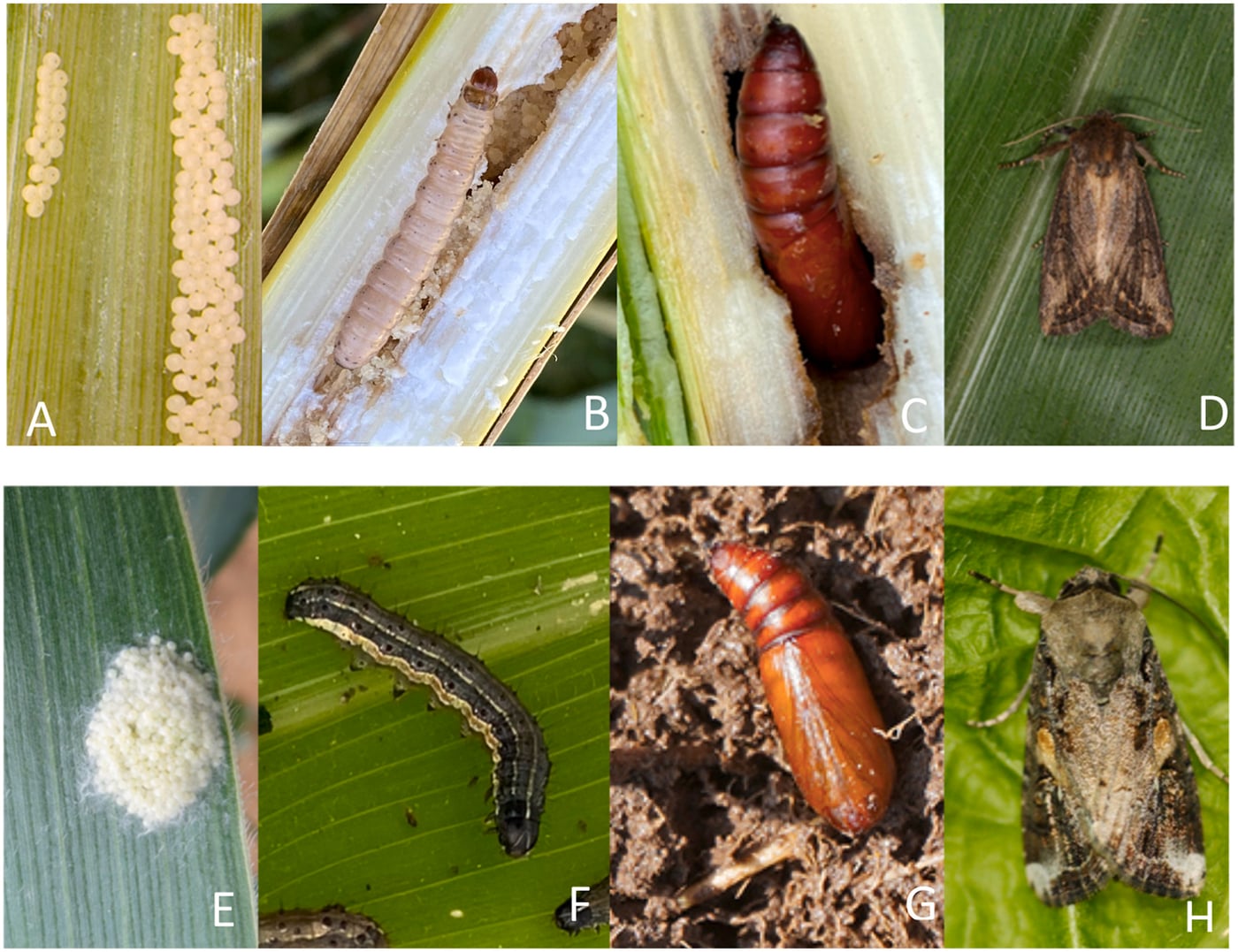
Crop Protection · 2026The fall armyworm (Spodoptera frugiperda) was first detected in Limpopo province, South Africa, during the 2016/2017 cropping season and continues to cause significant damage to maize production in the region. Despite the significant damage caused by S. frugiperda to maize,…
Research Highlights05 / 06
PLOS Pathogens · 2025Poisons made by moulds on crops cause cancer, sicken livestock and trigger food recalls. FABI's Neriman Yilmaz and colleagues explain why the problem persists, how climate change is shifting it, and what can be done.
Paper: Mycotoxins: An ongoing challenge to food safety and security
Research Highlights06 / 06
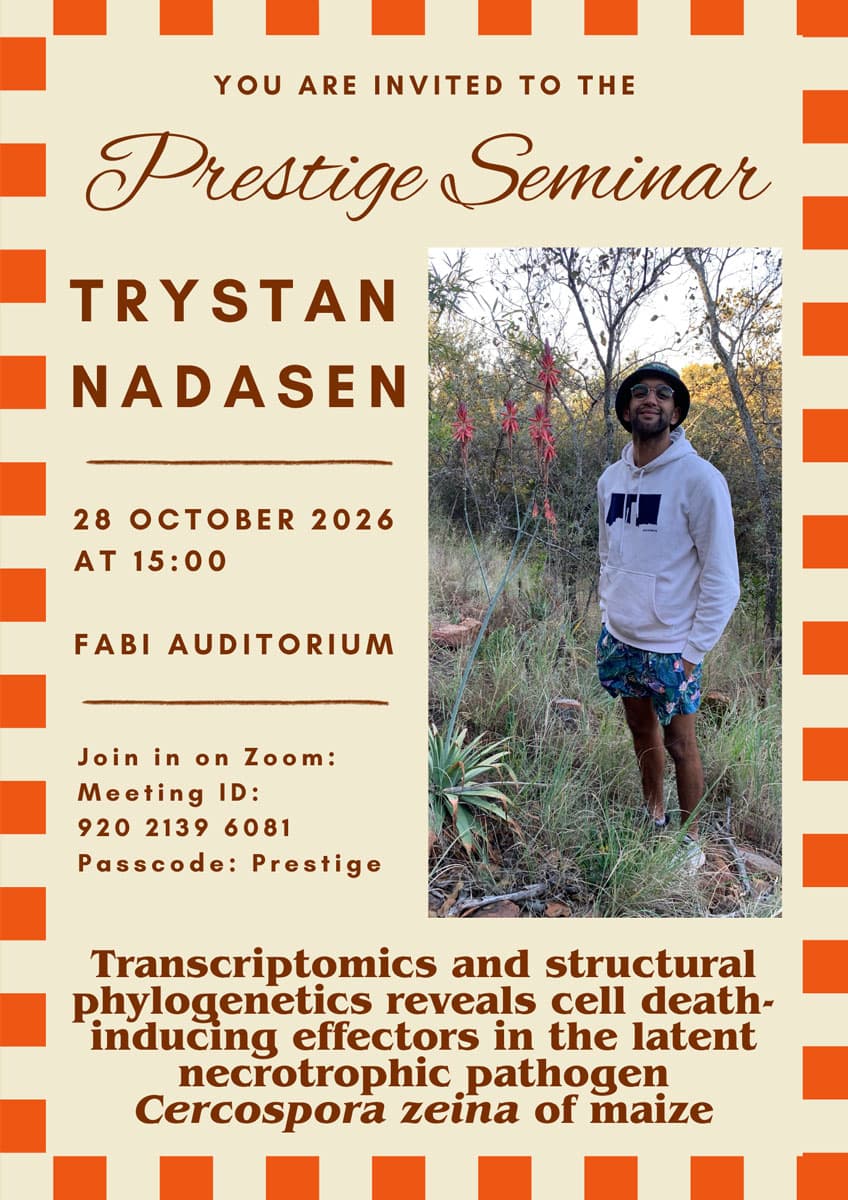
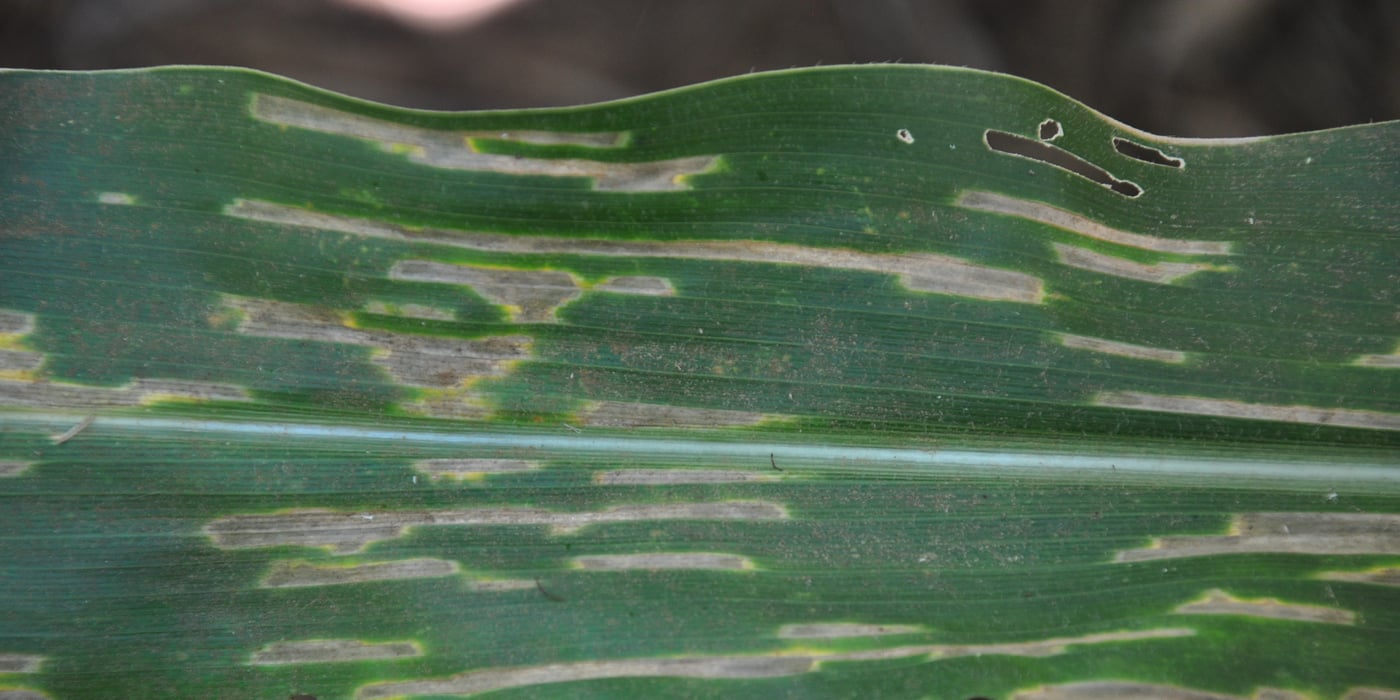
Frontiers in Plant Science · 2025Cercospora zeina is a fungal pathogen that causes gray leaf spot (GLS) disease on maize (Zea mays L.). Upon landing on a leaf, the pathogen enters through the stomata and continues to develop asymptomatically for up to 28 days before symptoms appear. As previous work has yet to…
PhD students graduated since 1998
MSc students graduated since 1998
Research papers since 1998
Research papers 2023–2025
Total citations since 1998