

Congratulations Ginna! 2026-05-07
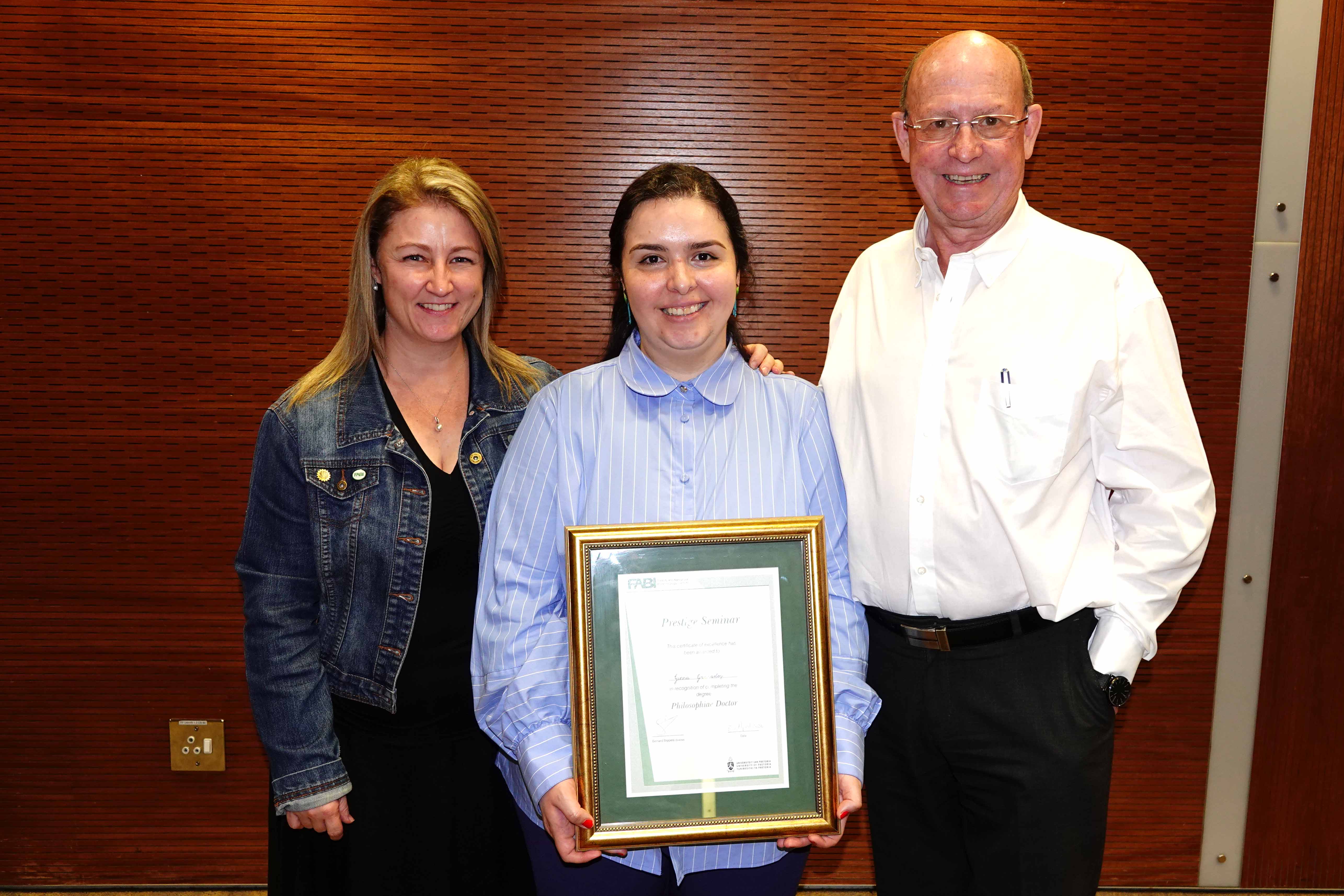
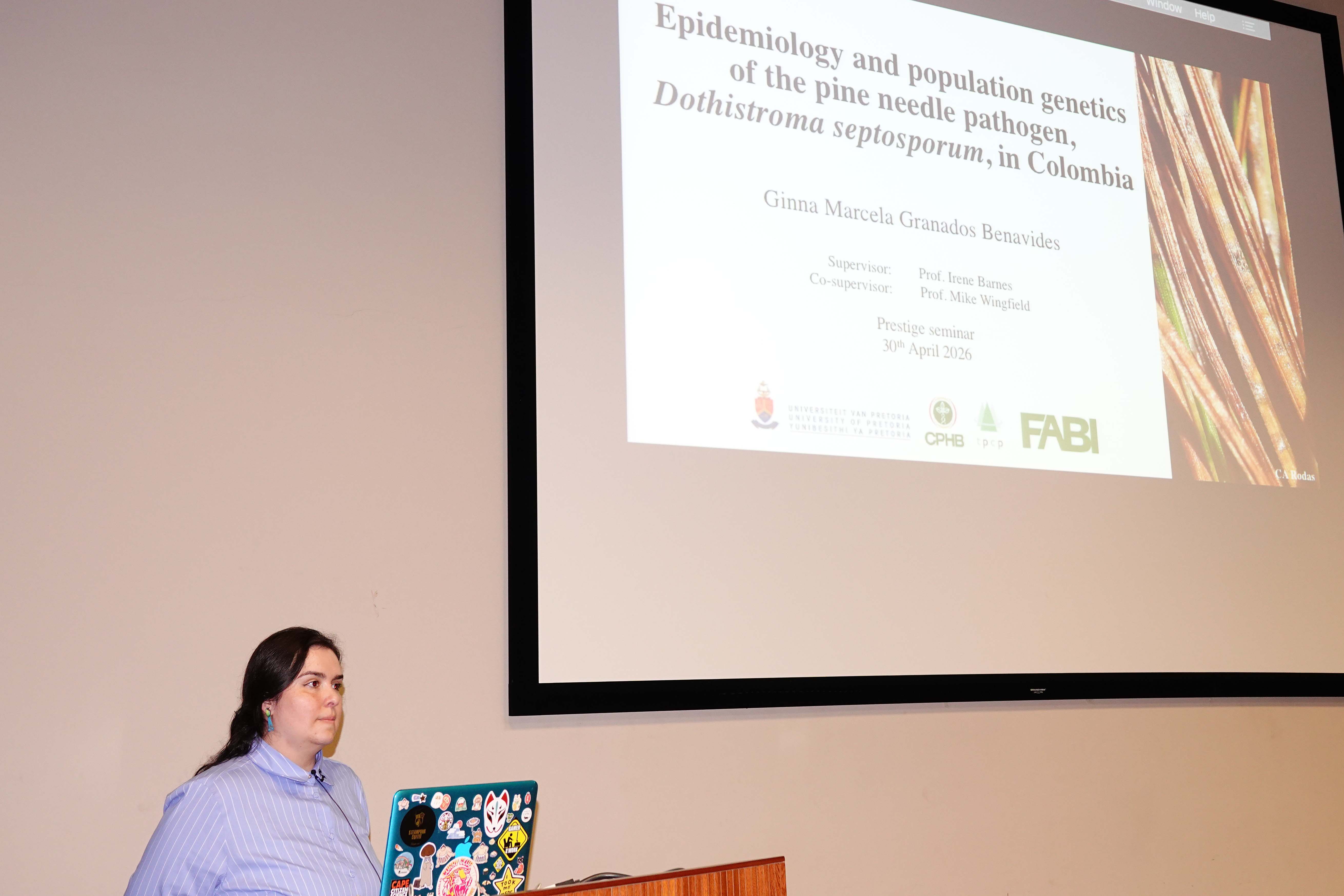
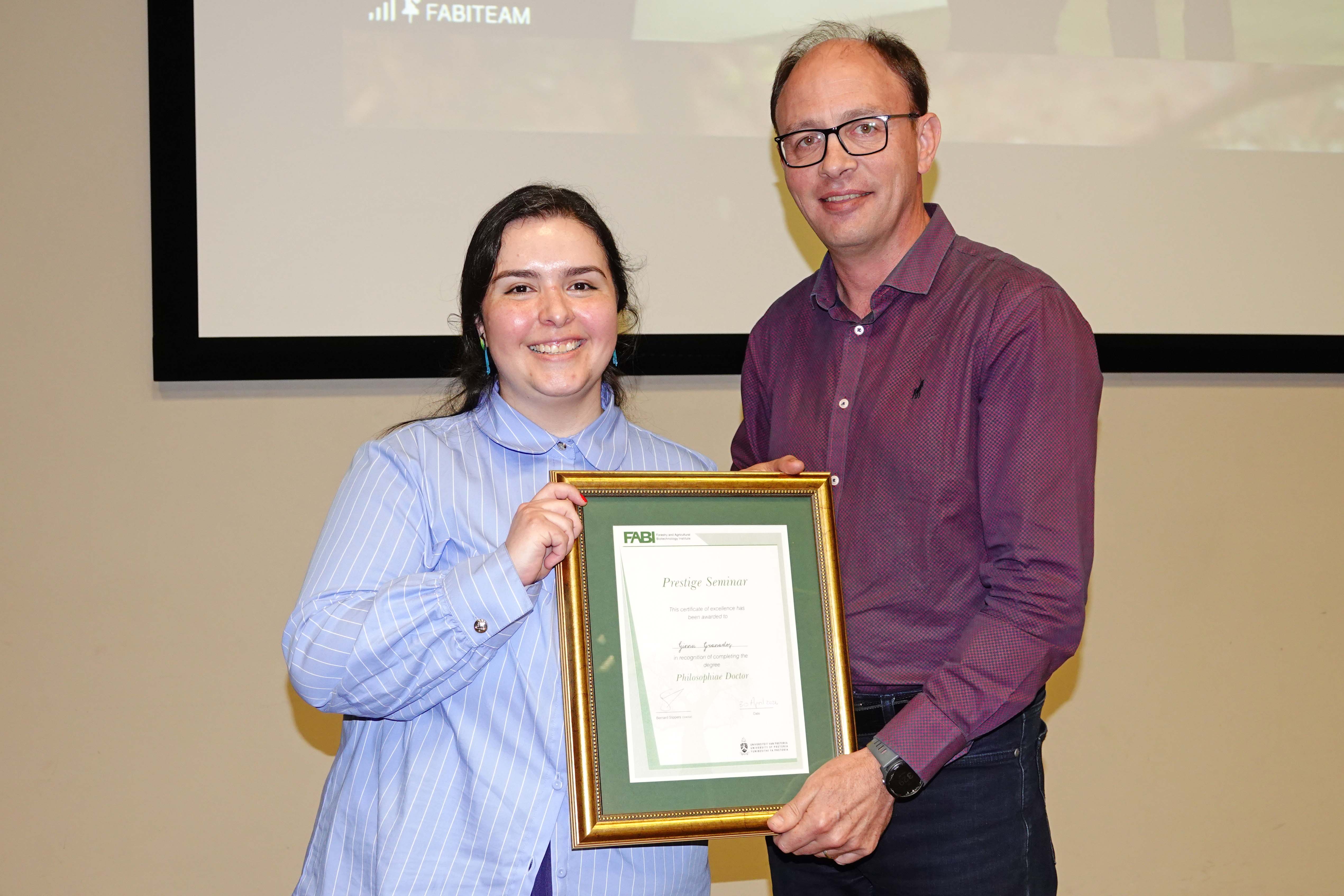
Well done to Dr Ginna Granados on the successful completion of her PhD degree! She presented her Prestige Seminar “Epidemiology and population genetics of the pine needle pathogen, Dothistroma septosporum, in Colombia” on 30 April, marking the end of her PhD journey. Ginna’s PhD was completed under the supervision of Prof. Irene Barnes, Prof. Mike Wingfield and Dr Carlos Rodas. The external examiners for her thesis were Prof. Steve Woodward (Isparta University of Applied Sciences, Turkey) and Prof. Joanne Taylor (Royal Botanic Garden Edinburgh, United Kingdom) with Dr David Nsibo as the internal examiner.
Ginna was working with Dr Carlos Rodas in Colombia, who encouraged her to continue her studies in FABI where she completed her MSc degree before embarking on her PhD journey. Professor Irene Barnes described her as an engaging and enthusiastic student with a warm personality, as well as someone well-suited to tackling challenging tasks. Ginna has developed extensive knowledge of forestry pests and pathogens, which led to her involvement in the national monitoring team at FABI. She has also actively participated in IUFRO conferences and Women in Science initiatives.
Dothistroma needle blight is an economically important disease of conifers and causes pine needles to turn brown and shed, leading to economic losses for forestry companies. In Colombia, D. septosporum has caused severe damage in commercial plantations, particularly those using Mesoamerican pine species. Ginna’s PhD investigated the epidemiology, host susceptibility and population genetics of this destructive fungal pathogen in Colombia to better understand its establishment and spread, since its first detection in 2008. The findings of her study contribute to understanding the invasion events of D. septosporum in tropical environmental conditions in the pine-growing areas of Colombia. Her study highlights the importance of early detection, long-term monitoring, and molecular and field data for risk assessments, tracking pathogen movements, and for developing management strategies in countries where similar pine species are planted.