









FABI News

FABI Events

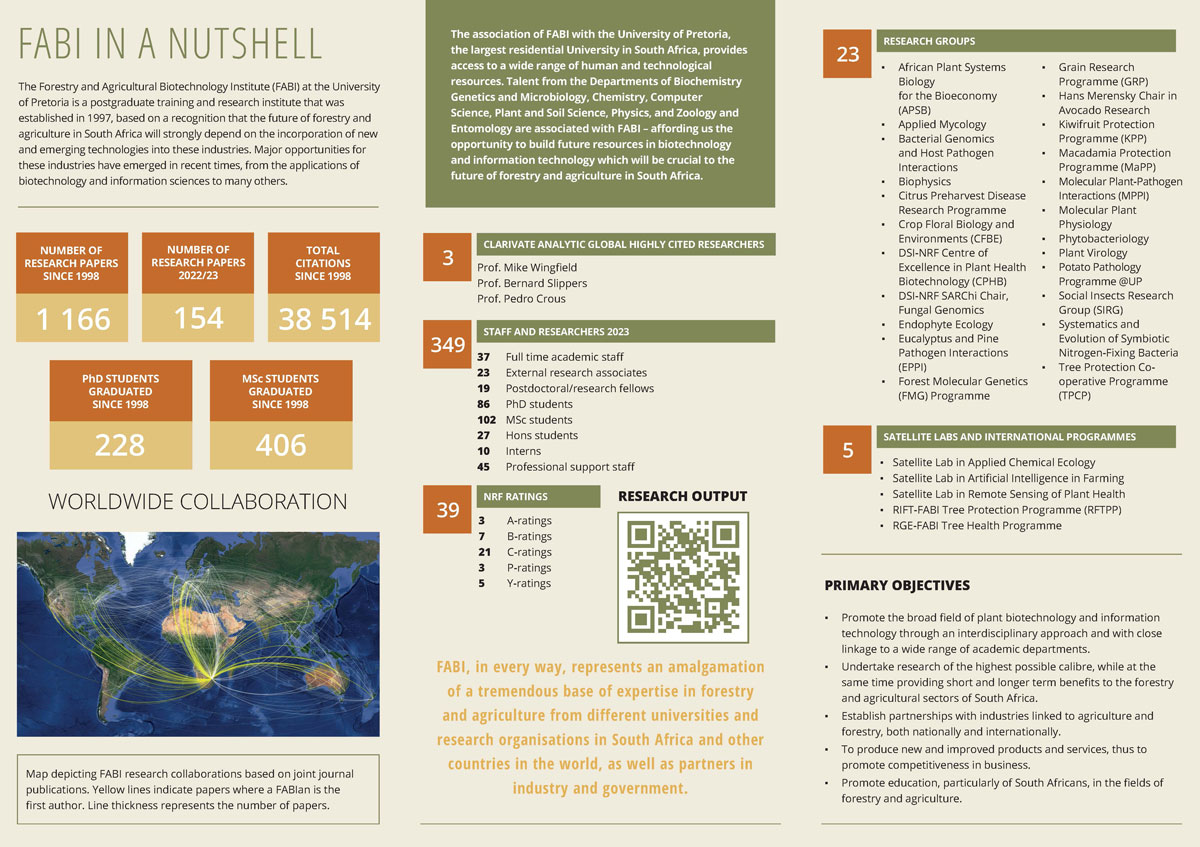
FABI in a nutshell

Research Features

Pest/Pathogen of the Month: August

Scientific name:  Sclerotinia sclerotiorum (Lib) de Bary.

Common names: white mold, cottony root, watery soft rot, stem rot, drop, crown rot and blossom blight.

Sclerotinia sclerotiorum (Lib.) de Bary is an Ascomycete fungus in the order Helotiales. This species is a multi-host necrotroph that infects more than 400 plant species, with lettuce, sunflower, canola and sugar bean being of economic importance to the South African agriculture industry. Sclerotinia sclerotiorum is characterized by the production of long-term survival structures called sclerotia which form an important part of the infection cycle. These structures can lay dormant in the soil for up to 8 years until environmental conditions become conducive for germination. Carpogenic germination of sclerotia results in the formation of a sexual structure (the apothecia) at soil level, which releases millions of ascospores that start the infection cycle. Myceliogenic germination forms hyphae and mycelium that results in direct sub-terrain infection of host plants, although this is limited to a radius of about 2 cm around the sclerotia. Signs and symptoms of disease depend on the host plant infected and can include water-soaked lesions or dry lesions on stems, leaves, fruits, or petioles. The presence of white fluffy hyphae on the host surface during high humidity forms the basis of the name “white mold” that refers to the disease. 

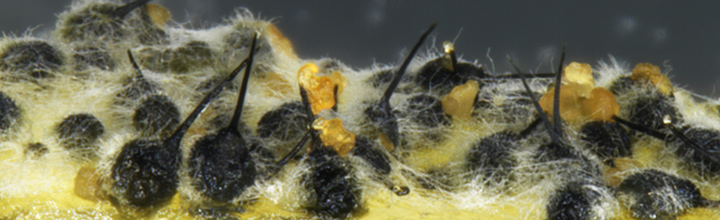
Photograph:Sclerotia (black structures) mixed in with soybean (Photo by Lisa Rothmann, taken from The South African Sclerotinia Research Network (SASRN) website)



New Publications

Ribeiro MF, Cavallini G, Solce GN, Favoreto AL, De Souza Passos J-R, Barbosa LR, Hurley BP, Wilcken CF. (2026) Cold storage of Gonipterus platensis (Coleoptera: Curculionidae) eggs for Anaphes nitens (Hymenoptera: Mymaridae) rearing. PeerJ :1-14. 10.7717/peerj.20903 PDF
Pham NQ, Marincowitz S, Marpaung YMAN, Tarigan M, Wingfield BD, Wingfield MJ. (2026) Two Cryphonectriaceae species from Eucalyptus leaves in North Sumatra and their stem inoculation outcomes. Fungal Systematics and Evolution 17:69–79. 10.15761/fuse.2026.17.05 PDF
Nickles GR, Stokes CK, Narh DL, Lynn KMT, Fuqua SR, Bryan C, Allen BM, Bivins CP, Bok JW, Brewer JS, Buthelezi ST, Clark JPRM, Coon KL, Corby LR, Coetzee MPA, Dewing C, Duong TA, Harris MA, Keller NP, Kopotsa K, Lane FA, Nichols HL, Nieuwoudt A, Nuñez MA, Medina Munoz ME, Park SC, Pham NQ, Ryan KT, Solís M, Vilgalys R, Wallace JM, Wang YW, Wingfield BD, Wingfield MJ, Worley TK, Zallek TA, Zamanian M, Hoeksma JD, Drott M, Pringle A. (2026) Equipped for success: Genomes and metabolites of the European Amanita muscaria are conserved in its novel South African range. New Phytologist 10.1111/nph.71064
Pham NQ, Wingfield MJ, Duong TA, Wingfield BD. (2026) Draft genome sequence of Elsinoe masingae: the causal agent of Eucalyptus scab in South Africa. Australasian Plant Pathology 55:37. 10.1007/s13313-026-01082-5
Pham NQ, Marincowitz S, Wingfield BD, Crous PW, Santos SA, Durán A, Tarigan M, Wingfield MJ . (2026) Pseudoteratosphaeria supramediana sp. nov. (Teratosphaeriaceae, Mycosphaerellales), a new foliar pathogen on Eucalyptus in Indonesia. Australasian Plant Pathology 55:28. 10.1007/s13313-026-01092-3