




















Pest/Pathogen of the Month: September
Scientific name: Spongospora subterranea f. sp.subterranea (Sss)
Common names: Powdery scab of potato
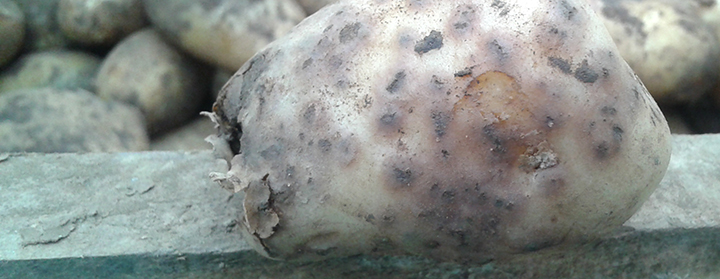
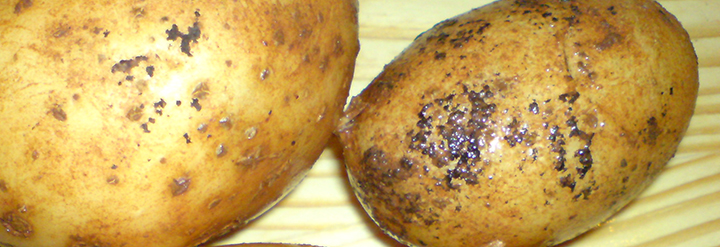
Powdery scab, caused by the obligate plant pathogen Spongospora subterranea f. sp. subterranea (Sss), is an unsightly blemish disease on potatoes and is a major problem in the potato industry worldwide. Powdery scab is identified by purple-brown pimple-like lesions that rupture the tuber periderm, creating powdery filled lesions. The powdery mass consists of masses of sporosori (collections of resting spores). These resting spores are highly resistant to unfavourable environmental conditions, allowing the pathogen to survive in the soil for over 50 years. The presence of these lesions reduces quality and marketability of seed tubers or tubers intended for consumption, causing major yield losses in potato production. This plant pathogen is also responsible for causing two other diseases, namely root infection and root galling, which also lead to yield reductions. Powdery scab disease is most severe in fields when the soil temperature is cool (9-17 °C) and has a high water content. Although infection occurs under cool and wet conditions, diseases have been recorded in hot and dry climates too, especially where irrigation is applied. The host range of Sss is broad as it infects plant species belonging to at least 26 families. Many weeds and commercial crop species have been confirmed to be alternative hosts of Sss. Powdery scab is difficult to successfully control due to the pathogen’s ability to form resting spores and the scarcity of resistant cultivars. No single control method can completely control Sss, however, an integrated management approach is advised for management of Sss.